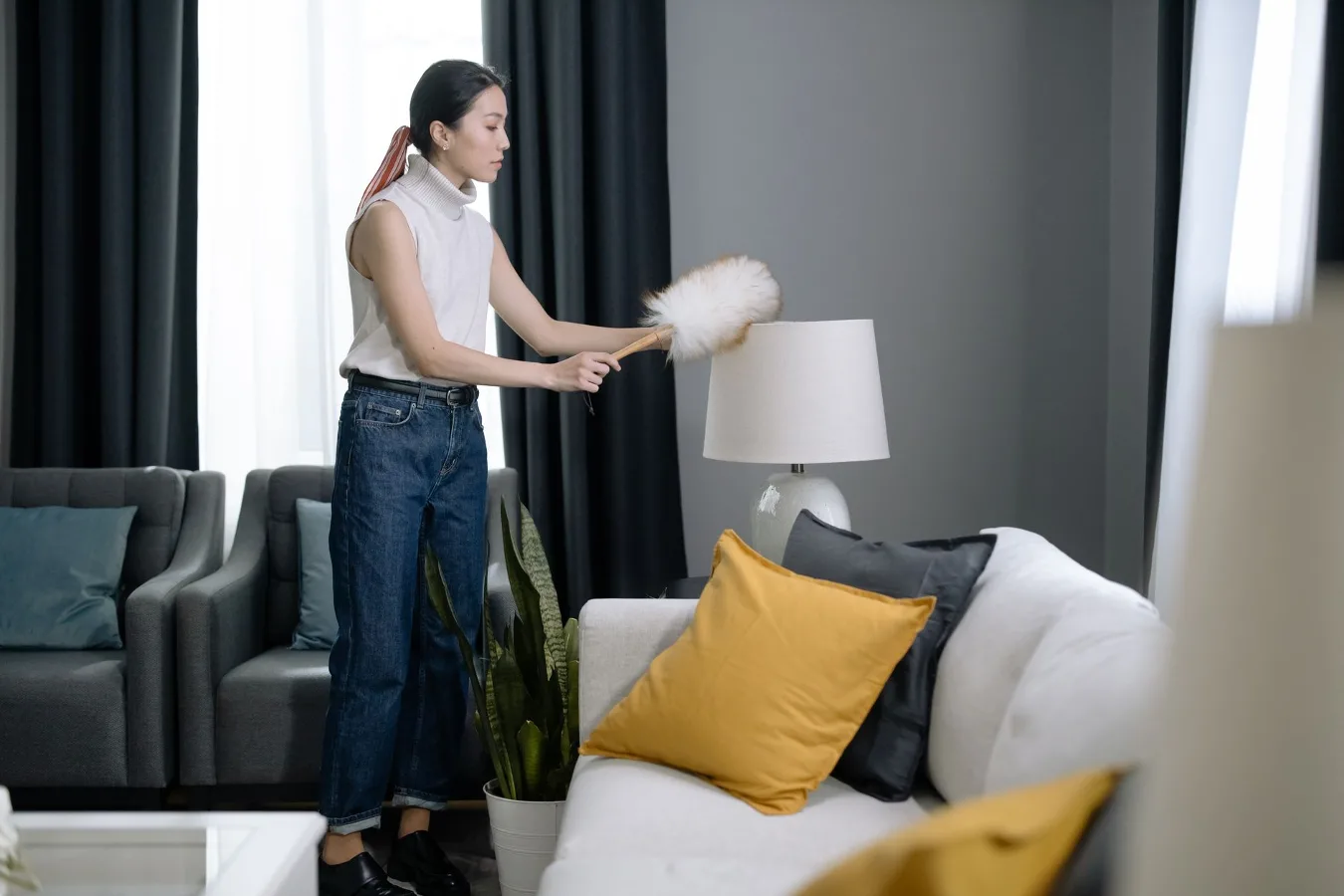
Do HEPA air purifiers help with dust mites?
Yes, but with an important caveat: a HEPA air purifier can help reduce the airborne dust mite allergens that circulate in a room, but it does not remove dust mites living in mattresses, pillows, carpet, or upholstered furniture. That distinction matters. If you are shopping for a HEPA air purifier for dust mites, you are really looking for a way to reduce what gets into the air you breathe, especially in bedrooms and other enclosed spaces where allergens tend to linger. air purifier vs dehumidifier offers more detail on this point.
Dust mites themselves are tiny creatures that live in soft furnishings and feed on shed skin cells. The main problem for many people is not the mite itself, but the allergen from its waste particles and body fragments. Those particles can become airborne during sleep, making a bedroom one of the most sensible places to use an air purifier.
A good purifier can be part of a broader allergy strategy. By itself, it is rarely the whole answer.
Who is most likely to benefit
This type of purifier makes the most sense for people who notice allergy symptoms that are worse at night or in the morning. That often includes sneezing, congestion, watery eyes, coughing, or a stuffy feeling on waking. Children, adults with perennial allergies, and anyone trying to make a bedroom feel cleaner and easier to breathe in may find a HEPA unit useful.
The biggest payoff usually comes in bedrooms, where people spend many hours in a relatively small space. A purifier can also help in guest rooms, nurseries, or home offices where carpet, drapes, and soft furnishings can hold onto allergens. If the room is already dusty or difficult to keep clean, filtration can be a practical support rather than a stand-alone fix.
What a HEPA purifier can do, and what it cannot
HEPA filtration is designed to capture very fine particles as air passes through the filter. That makes it well suited to helping with dust mite allergen particles that are suspended in the air. The purifier can improve the air you breathe while it is running, especially if it is appropriately sized for the room and placed where air can move freely. choosing the right HEPA filter offers more detail on this point.
What it cannot do is eliminate the source of the problem. Dust mites remain in bedding, carpets, cushions, stuffed toys, and other soft materials. If those materials continue to collect dust and moisture, allergens can keep re-entering the air. That is why many people are disappointed when they expect a purifier to work like a complete treatment.
There is also a common misconception that a purifier should be placed anywhere in the room and still work the same way. In reality, placement matters. A unit blocked by furniture, tucked in a corner, or undersized for the room may do far less than expected.
Buyer scenario: what kind of setup makes sense
If your main concern is nighttime symptoms, a bedroom-focused approach is usually the best starting point. That means looking for a true HEPA purifier that is appropriate for the size of the room, then pairing it with habits that lower allergen buildup. best air purifier features for allergy relief offers more detail on this point.
For a small bedroom, a compact purifier may be enough if it can circulate the air effectively. For a larger primary bedroom, open-plan suite, or room with high ceilings, a more capable unit may be more appropriate. The goal is not just clean-looking design. It is steady air movement through a real filtration system.
If allergies affect more than one room, it may be better to prioritize the most-used space first rather than spreading budget across multiple weak units. A single well-chosen purifier in the room where you sleep often provides more practical value than several underpowered devices elsewhere.
Trade-offs worth thinking through
A HEPA purifier is helpful, but it comes with everyday trade-offs. The most obvious is noise. Some units are quiet enough for sleep on lower settings, while others become noticeable as fan speed increases. If the purifier is too loud, people tend to turn it off at night, which defeats the purpose.
Another trade-off is maintenance. Filters need regular replacement or cleaning according to the manufacturer’s instructions. A purifier that is allowed to run with a clogged filter may lose effectiveness. In a home already busy with allergy care, maintenance can become the weak link.
There is also the matter of cost beyond the sticker price. Over time, you may need replacement filters, and some purifiers have proprietary filters that are more limiting than standard ones. A unit that seems affordable at first may be less attractive if its upkeep is inconvenient or expensive relative to its use.
Material and spec factors that actually matter
When shopping for a HEPA air purifier for dust mites, a few specifications are more useful than glossy claims. Start with the filter type. True HEPA is the benchmark most buyers should look for if the goal is capturing fine airborne allergens. Some products use terms like HEPA-style or HEPA-type, which may not indicate the same level of filtration.
Room size coverage matters as well. A purifier should be suitable for the space where it will be used, especially if you want it to run continuously in a bedroom. A unit that is too small may clean the air too slowly to make a noticeable difference. On the other hand, oversized units can be bulkier and noisier than necessary.
Air changes, fan speeds, and CADR are often discussed in purifier shopping. You do not need to obsess over every technical detail, but it helps to understand the basics: stronger airflow usually means faster filtration, as long as the unit remains usable in everyday life. A purifier that is powerful but unbearable to sleep near is not a good fit.
An activated carbon filter can be useful if there are odors or other household irritants in the room, though carbon is not the main feature for dust mite allergens. It is an added benefit rather than the core reason to buy. If your priority is particulate filtration, HEPA remains the central feature.
Placement and room setup make a bigger difference than many people expect
One overlooked consideration is that an air purifier works on the air around it, not on every allergen surface in the room. That means placement matters more than many product listings suggest. Setting the unit near the bed can be useful, but it still needs enough clearance to draw air in and push cleaned air back into the room.
If possible, keep the purifier away from curtains, clothing piles, or furniture that blocks airflow. In a bedroom, it should complement the room layout rather than fight it. Also, resist the urge to place it so close to the bed that it becomes disruptive. A purifier is most useful when it can run consistently, not only when you remember to switch it on.
Humidity control deserves special mention. Dust mites tend to thrive in humid environments, so reducing excess moisture can support your broader efforts. A purifier does not replace a dehumidifier or good ventilation. It works best as one part of a layered approach.
How to judge quality beyond the label
Not every purifier marketed for allergies is equally useful. A careful buyer looks beyond broad claims and focuses on practical build and maintenance factors. Filter availability is important. If replacements are hard to find, expensive, or tied to a confusing subscription model, long-term use becomes harder.
Controls matter too. A simple purifier with clear settings is often more effective in real life than a feature-heavy model that feels inconvenient to use. Night mode, filter-change indicators, and easy access to the filter compartment can all make the unit easier to live with.
Noise profile is especially relevant for bedrooms. A machine that sounds acceptable in the afternoon may feel very different at night. Since sleep quality is part of the goal, the best purifier is usually the one you can keep running without thinking about it.
| Factor | Why it matters for dust mite allergies |
|---|---|
| True HEPA filtration | Helps capture fine airborne allergen particles |
| Room size fit | Determines how effectively the unit can clean the air |
| Noise level | Affects whether you can comfortably run it at night |
| Filter replacement access | Supports long-term use and consistent performance |
| Airflow and placement | Influence how much room air passes through the filter |
| Maintenance simplicity | Makes it easier to keep the purifier working properly |
Common mistakes people make
One common mistake is expecting an air purifier to solve a dust mite problem without any other changes. If bedding, carpets, and soft furnishings continue to accumulate allergens, the room can still feel irritating. Another mistake is buying based on marketing language alone rather than filtration type and room fit.
People also sometimes run the purifier only occasionally. For allergen reduction, consistency matters more than short bursts of use. If the machine only runs after symptoms start, you may not get the same benefit as you would from steady operation in the room where you sleep.
Finally, some buyers overlook maintenance. A filter that should have been changed months ago can undercut the entire setup. Dust mite control is a long game, and the purifier has to remain part of a maintained system.
What to do alongside the purifier
If you want more complete dust mite control, think in layers. Wash bedding regularly according to fabric care instructions, and consider allergen-resistant mattress and pillow covers if they fit your household needs. Reducing clutter helps because fewer soft surfaces means fewer places for dust to settle.
Vacuuming with a machine that has strong filtration can also help, especially on carpet and upholstered furniture. If humidity is high, improving moisture control can make the room less friendly to dust mites over time. These steps are not glamorous, but they are often the difference between modest relief and meaningful improvement.
For some households, replacing heavy curtains or minimizing stuffed items in the sleep area can also help. The broader the allergen reservoir in the room, the less a purifier alone can accomplish.
Next steps for choosing the right unit
If you are deciding whether to buy a HEPA air purifier for dust mites, start with the room that matters most: usually the bedroom. Measure the space, think about where the purifier would sit, and decide whether you need a quiet night-friendly model or something more powerful for a larger room.
Then compare three things side by side: filter quality, room coverage, and maintenance ease. Those are more useful than decorative features or vague wellness claims. If you have allergies that are strongly tied to sleep, that practical focus will usually serve you better than chasing the most elaborate model.
The best outcome often comes from combining a sensible purifier with dust reduction habits that you can maintain. That approach may not sound dramatic, but it is realistic, and realism is what makes an allergy plan sustainable.
