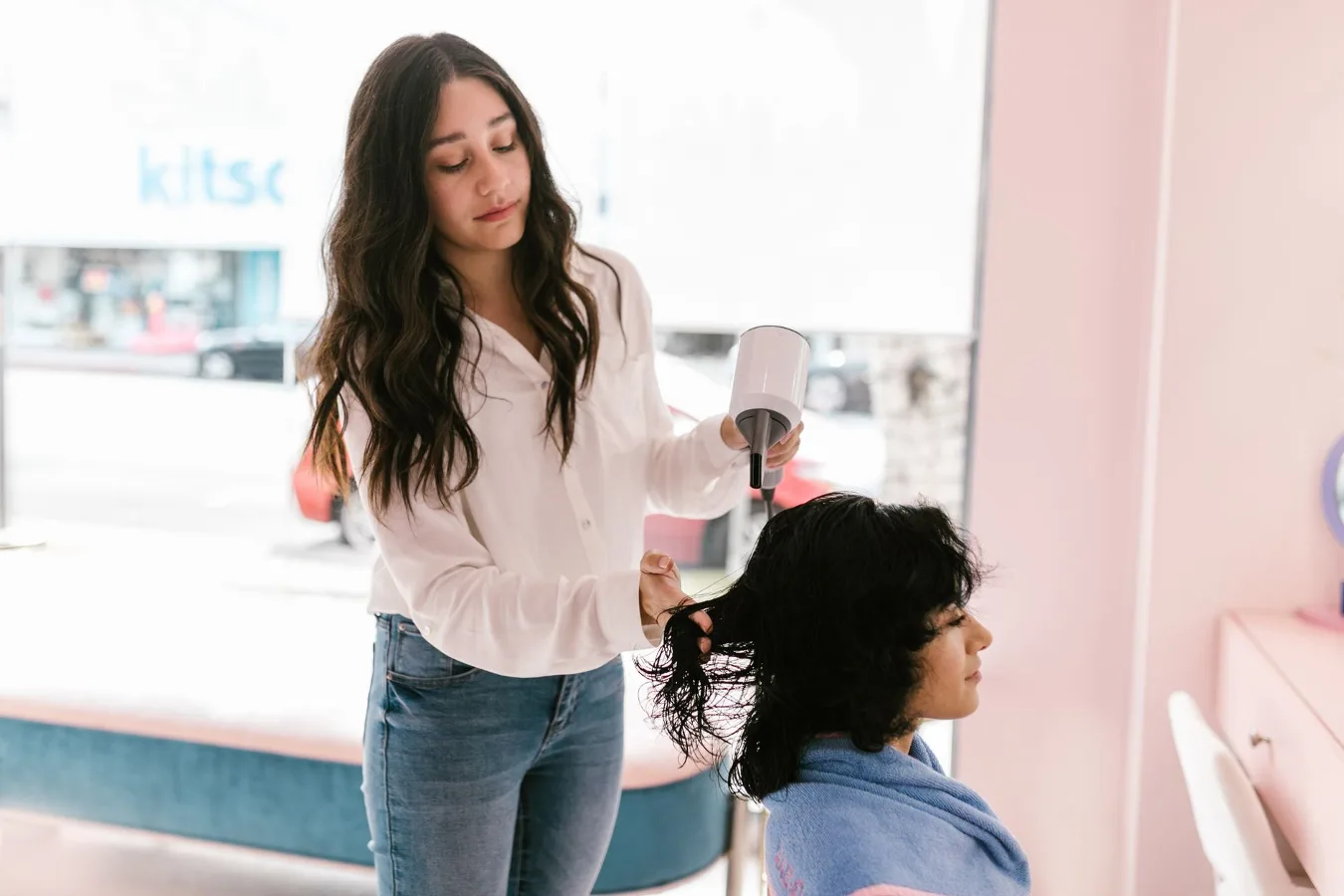
A standing hair dryer is a hands-free drying tool that lets you sit under a hood or bonnet while warm air circulates around your hair. It is especially useful for roller sets, deep conditioning treatments, protective styles, and any routine where you want even drying without holding a dryer the entire time. canine hair dryer offers more detail on this point.
If you are trying to decide whether a standing hair dryer belongs in your setup, the short answer is this: it is a practical choice when even airflow and hands-free use matter more than portability. It is less ideal if you need a quick, grab-and-go tool for everyday blow-drying.
Quick answer: what a standing hair dryer is best for
A standing hair dryer is designed to sit on the floor or a stable base while the hood or bonnet is positioned over your head. Instead of moving the dryer around your hair, you stay in place and let the machine do the work. That makes it a strong option for styles that need steady heat distribution, such as roller sets, twist-outs that need to dry without disruption, and conditioning caps that benefit from gentle warmth.
For many people, the appeal is not speed alone. It is control. A standing dryer can make it easier to keep curls, rollers, and sections intact while drying, which can matter more than raw power.
How it compares with other hair dryers
The best way to judge a standing hair dryer is to compare it with the more familiar options most shoppers already know.
| Dryer type | Best for | Main advantage | Main limitation |
|---|---|---|---|
| Standing hair dryer | Roller sets, deep conditioning, hands-free styling | Even airflow and minimal handling | Takes up space and is less portable |
| Handheld blow dryer | Fast everyday drying and shaping | Flexible and easy to use on demand | Requires constant movement and technique |
| Hooded dryer | Salon-style drying and setting styles | Good coverage for set styles | Can be bulkier and less convenient to store |
| Bonnet dryer | Lightweight home use and travel-friendly routines | Compact and easier to pack away | Usually less structured and may feel less stable |
That comparison reveals the most overlooked point: a standing hair dryer is not automatically the “better” dryer. It is better when the style itself benefits from staying still. If your routine changes often, or you need something that disappears into a drawer, a handheld model may be the more practical choice.
What to look for before buying one
The right standing hair dryer depends less on brand hype and more on fit-for-purpose details. A few factors matter most.
Adjustability and comfort
Height and hood positioning affect whether the dryer feels usable for long sessions. If the unit does not adjust well, you may end up hunching, leaning, or shifting constantly. That matters more than many shoppers expect, especially for thicker hair or longer drying sessions.
Airflow and heat control
Different hair types and styles need different heat approaches. A good standing dryer should give you practical control over airflow and heat rather than forcing one fixed setting. Stronger settings are not always better; they can be too aggressive for delicate hair, color-treated hair, or conditioning treatments that call for gentler warmth.
Hood size and coverage
Coverage should match the styles you wear. A hood that is too small may press on rollers, clips, or high-volume styles. A hood that is too shallow may not distribute air evenly across the hair. This is especially relevant for anyone using flexi rods, magnetic rollers, or larger setting tools.
Stability and footprint
Standing dryers occupy more space than compact dryers, so the base and overall footprint matter. If you have a small room, shared bathroom, or limited storage, that can become a real limitation. Before buying, think about where the dryer will live when it is not in use.
Noise and session length
A dryer that runs for a long time becomes part of the experience, not just the equipment. If noise bothers you, or if you plan to use it while reading, working, or relaxing, sound level can influence whether the tool feels convenient or annoying.
Who a standing hair dryer suits best
Standing hair dryers are most helpful for people whose styling process depends on setting hair in place and letting it dry undisturbed.
- People who wear roller sets and want more even drying
- Natural hair users who need less manipulation during drying
- Protective style wearers who want to dry braids, twists, or set styles without disturbing them
- Anyone doing deep conditioning who wants controlled warmth
- Home stylists who like salon-style routines and have room for larger tools
It is less compelling if your main goal is speed after a shower, or if you frequently style on the move. People with limited storage space may also prefer a smaller bonnet dryer or a compact handheld model.
Mistakes to avoid with a standing hair dryer
Buying the wrong dryer is one issue. Using it poorly is another. A few common mistakes show up again and again.
Choosing the wrong size for your style
Not every hood fits every hairstyle. If you wear large rollers, high buns, or thick sectioned styles, a tight hood can flatten the finish or leave uneven drying underneath. Match the dryer to the styles you actually wear, not just the one you imagine using occasionally.
Assuming more heat means faster results
High heat can seem efficient, but it may create dryness on the outside while leaving moisture trapped inside. That can be a problem for set styles because the surface may feel dry before the full style is ready.
Ignoring setup space
A standing hair dryer can be awkward in a cramped bathroom or bedroom corner. Measure the space where it will sit, and think about how you will get in and out of the chair comfortably. A practical setup matters as much as the tool itself. Best Makeup Brush Set: How to Choose offers more detail on this point.
Using it for every routine
One common misconception is that a standing dryer should replace all other dryers. In reality, it works best as part of a broader hair tool setup. A handheld dryer may still be better for quick touch-ups, targeted root drying, or travel.
Skipping hair prep
Proper sectioning, product distribution, and towel drying still matter. A standing dryer cannot fix uneven product application or overly wet hair. In fact, those issues can make drying slower and less consistent.
Practical alternatives worth considering
If a standing hair dryer sounds useful but not perfectly suited to your routine, there are a few alternatives that may be a better fit.
- Handheld blow dryers for flexibility and everyday convenience
- Bonnet dryers for lighter storage needs and simpler home use
- Hooded salon dryers for users who want a more structured hands-free option
- Heat caps or conditioning caps for treatment-focused routines rather than full drying
- Drying diffusers if you want to encourage curl pattern while reducing disturbance
The better choice often comes down to your routine, not the device category itself. If your hair usually needs low-manipulation drying, the standing format makes sense. If you mostly need quick drying for everyday wash-and-go styling, a different tool may be easier to live with.
How to decide if it is worth the space
One overlooked consideration is that a standing hair dryer is as much a lifestyle choice as a styling tool. It works best for people who repeat the same type of styling often enough to justify the footprint. If you only occasionally set your hair, the tool may feel bulky. If you regularly use rollers, conditioning treatments, or salon-style drying at home, it can become one of the more useful appliances in your routine.
A good way to decide is to ask three questions: do you need hands-free drying, do your styles benefit from even airflow, and do you have room to store the unit? If the answer is yes to all three, a standing hair dryer is likely worth serious consideration.
Maintenance and care basics
Like most beauty appliances, a standing hair dryer lasts longer and works more predictably when it is kept clean and stored properly. Follow the manufacturer’s instructions for filter cleaning, cord handling, and hood care. Do not block vents, and avoid using the dryer in damp conditions that are not appropriate for the appliance design.
If your unit has detachable parts, keep them organized so the hood, base, and accessories do not get damaged in storage. This is another area where size matters: larger appliances are easier to use when they also have a realistic home storage plan.
FAQ
Is a standing hair dryer better than a handheld dryer?
Not always. A standing hair dryer is better for hands-free drying and set styles, while a handheld dryer is usually better for quick, flexible styling and everyday touch-ups.
Can a standing hair dryer be used on natural hair?
Yes. Many people with natural hair use standing dryers for roller sets, deep conditioning, and styles that need low manipulation. The key is choosing the right heat level and hood size for the style.
What is the main drawback of a standing hair dryer?
The biggest drawback is usually space and convenience. It takes up more room than a handheld dryer and is less portable, so it works best in a dedicated or semi-dedicated styling area.
Is a hooded dryer the same as a standing hair dryer?
They are closely related terms in everyday use, but people often use “standing hair dryer” to describe a hooded or bonnet-style unit mounted on a stand or base for hands-free use.
Do standing hair dryers work for deep conditioning?
They can. Many people use gentle heat from a standing dryer to help conditioning treatments work more comfortably, but the exact approach should depend on the product directions and your hair’s needs.
If your routine relies on set styles, controlled heat, and a hands-free process, a standing hair dryer can be a smart addition. If you need something compact or fast, it may be better to look at bonnet or handheld alternatives first.
