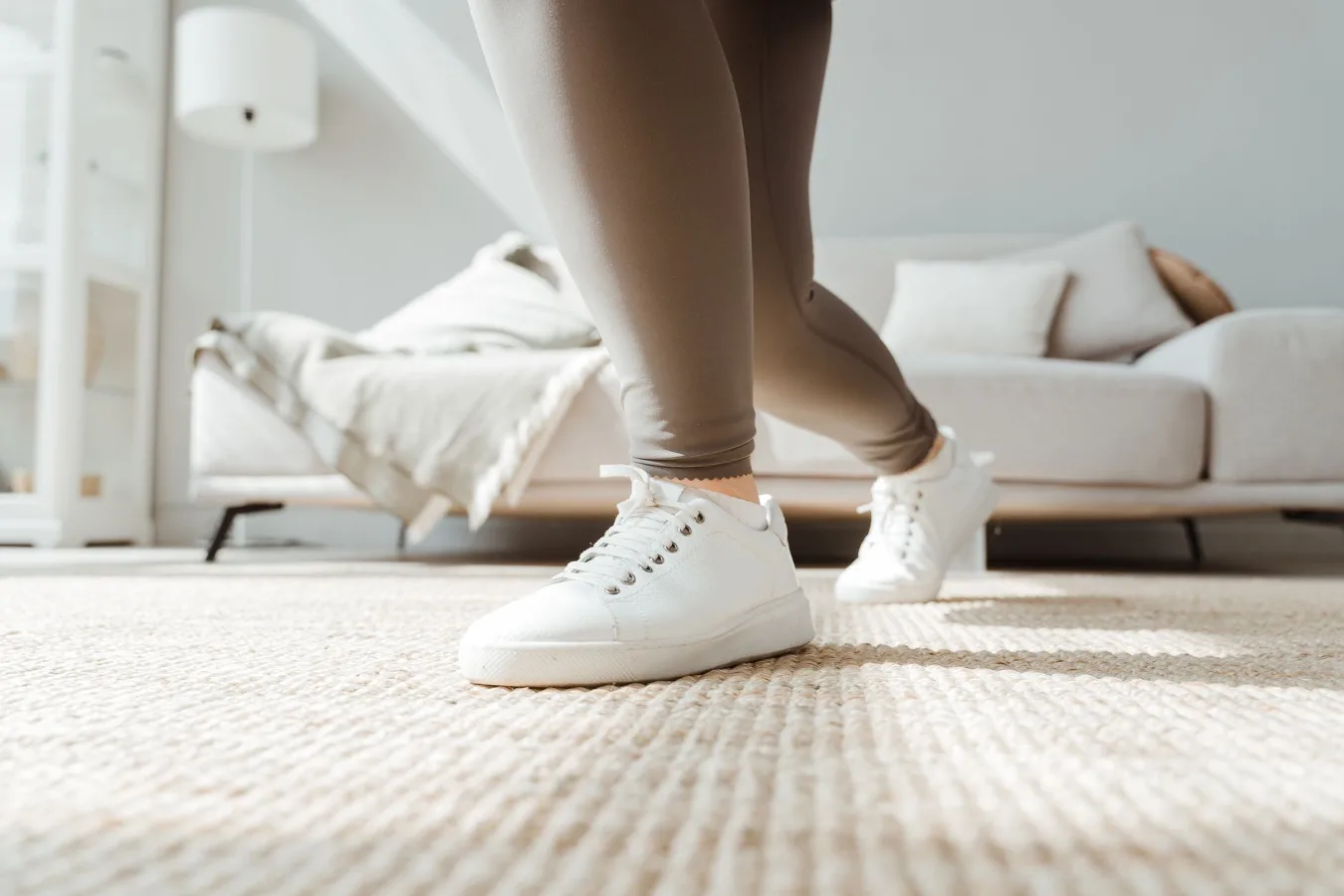
If you want to place a walking pad on carpet, a mat is usually a smart buy. The right walking pad mat for carpet can help the machine feel more stable, protect the carpet from compression and wear, and reduce the amount of vibration that reaches the floor and nearby rooms.
The catch is that not every mat works equally well on carpet. Soft, thick, or high-pile carpet can let equipment sink slightly, which affects balance and movement. That means the best mat is not just about size; it also depends on carpet thickness, walking pad weight, and how often you plan to use the machine. Stepper vs Walking Pad: Which Fits Better? offers more detail on this point.
When a walking pad mat matters most
A mat matters most when the walking pad sits on a surface that is soft, textured, or likely to show wear. Carpet can trap dust, compress under pressure, and create a less predictable base than hard flooring. If you live in an apartment, use the machine near a desk, or want to keep the setup neat over time, the mat becomes more than a convenience accessory.
It is especially useful when you want to:
- keep the walking pad from shifting during use
- reduce indentation on carpet fibers
- make cleanup easier under and around the machine
- add a barrier against sweat, dust, or scuff marks
- limit vibration transfer to the floor below
There is also a practical misconception worth correcting: a mat does not magically fix every carpet problem. If the carpet is very plush or the underlayment is soft, the mat may improve the setup but not eliminate instability. In those cases, the machine’s own weight, frame design, and foot placement matter just as much.
What to look for in a carpet mat
Choosing the right mat is less about branding and more about a few useful design features. For carpet use, those features have to work together. A mat that looks durable on paper may still feel wrong if it slides, curls, or sinks too easily. choosing a treadmill mat for home workouts offers more detail on this point.
Size and coverage
The mat should extend beyond the walking pad on all sides so it can catch movement, drips, dust, and vibration. Too-small mats are a common mistake because they leave the edges exposed and can make the setup feel cramped. Extra coverage also helps if the walking pad has a front lip, rear rollers, or a slightly longer frame than expected.
Before buying, measure the machine’s footprint and leave enough space for safe mounting, stepping on, and off. If you use the walking pad near a desk, consider how much room you need for cable routing and your normal walking stance.
Material and density
On carpet, the mat needs enough density to resist compression without feeling rigid and slippery. A denser material can help distribute weight more evenly, which is useful when the carpet beneath is soft. At the same time, the surface should provide enough grip to keep the machine from migrating during use.
Common material choices include rubber-like surfaces, foam composites, and multi-layer mats designed for home fitness equipment. Each has trade-offs. Softer mats may absorb some vibration but can feel too compressible on plush carpet. Firmer mats usually improve stability but may be heavier and less convenient to move.
Grip on both sides
One overlooked detail is whether the mat grips the carpet as well as the walking pad. A mat can be anti-slip on top but still creep on carpet if the underside lacks traction. This is especially relevant for under-desk walking, where repeated footfalls create small but constant movement.
Look for a bottom surface designed to stay put on textured flooring. If the manufacturer only emphasizes top-side grip, that may be enough for hard floors but not ideal for carpet.
Thickness without excess softness
More thickness is not always better. A very thick mat can feel cushioned, but on carpet it may introduce too much give. That can make the machine feel less planted. For walking pads, the goal is usually controlled firmness, not a squishy surface.
Think of the mat as a stabilizing layer, not padding for comfort. Your carpet already provides some cushioning, so the mat should supplement that without turning the whole setup into a soft platform.
Noise and vibration control
A mat can help reduce some noise, but expectations should stay realistic. It may soften vibration transfer, especially on hard subfloors under carpet, but it will not silence motor noise, belt sound, or the rhythm of footsteps. If quiet operation is a major concern, the mat should be part of a larger strategy that also includes maintenance and placement.
For apartment users, a better mat can make the setup more neighbor-friendly, but it cannot fully compensate for a walking pad that is already loud or for a floor that transmits sound easily.
How to choose the right mat step by step
If you are comparing options, start with the floor first and the product second. That order matters because carpet conditions vary more than many buyers expect.
1. Identify your carpet type
Low-pile carpet usually works better for walking pads than thick plush carpet. The firmer the carpet, the more likely a mat will perform as intended. High-pile carpet may require a denser mat or a different setup altogether.
If you are unsure, press your hand into the carpet where the machine will sit. If it compresses deeply or feels springy, that is a sign you should prioritize stability over cushioning.
2. Check the walking pad footprint
Measure the full base, not just the belt area. Some buyers focus on the walking surface and end up with a mat that does not support the whole machine. The base needs full support so weight is spread evenly.
Also account for any transport wheels, folding sections, or control panels that may extend beyond the obvious footprint.
3. Match the mat to your use case
A walking pad used a few times a week in a spare room has different needs than one used daily under a standing desk. Frequent use places more demand on durability and grip. If the machine stays in one place, weight and stability may matter more than portability. If you move it after each session, easier handling becomes important too. walking pad standing desk offers more detail on this point.
4. Decide what problem matters most
Different buyers want different benefits:
- Floor protection: focus on coverage and material durability
- Stability: focus on density and anti-slip grip
- Noise control: look for vibration-dampening properties, but keep expectations reasonable
- Portability: choose a mat that rolls or folds easily without losing shape
Trying to maximize every benefit at once can lead to an overbuilt mat that is hard to handle or too soft for carpet. The best choice is usually the one that solves the main problem well.
5. Confirm compatibility with the walking pad design
Not every walking pad behaves the same on carpet. Heavier models are generally easier to stabilize, while lighter compact units may benefit more from a grippier mat. If the walking pad has a narrow base or high center of gravity, the mat should emphasize traction and support.
For models used under a desk, cable management also matters. A mat with enough surface area can help keep cords out of the walking path and reduce clutter around the setup.
Examples of better and worse fit
Some setups clearly benefit from a mat, while others need a more cautious approach.
- Good fit: low-pile carpet, a compact walking pad, and a firm mat with a grippy underside
- Good fit: apartment use where you want extra protection and a cleaner-looking workout zone
- Borderline fit: medium-pile carpet with a lighter walking pad that already feels slightly unstable
- Less ideal: thick plush carpet, a very lightweight machine, and a soft mat that increases sinking
If your carpet is especially plush, one practical alternative is to use a firmer surface under the mat, such as a denser area rug pad or a designated workout space with tighter pile. The goal is to reduce the amount of “give” beneath the machine.
Common mistakes to avoid
Most problems with walking pad mats on carpet come from a few avoidable errors.
- Buying based on appearance alone. A sleek mat may still be too soft or too slick for carpet.
- Choosing a mat that is too small. Limited coverage can make the setup less stable and less tidy.
- Ignoring carpet depth. A mat that works on low-pile flooring may disappoint on plush carpet.
- Expecting it to solve all noise. Sound control depends on the machine, the floor, and the room layout.
- Skipping maintenance. Dust, lint, and grit can reduce traction over time.
A less obvious issue is edge curling. If the mat does not lie flat, the edges can become a trip point or make the walking pad sit unevenly. This is a small detail that becomes annoying fast in a home office or shared space.
How to care for the mat and carpet
Keeping the mat in good condition helps it perform better on carpet. A clean underside grips more reliably, and a flat, unwarped mat is less likely to shift.
- vacuum the carpet beneath the mat periodically
- wipe sweat or dust from the mat surface as needed
- check for curling edges or compression marks
- move the mat occasionally so one area of carpet is not constantly under load
If you plan to leave the walking pad in place long term, rotating the setup slightly from time to time can help prevent deep, permanent carpet impressions in one spot.
When a mat may not be enough
There are cases where a mat is only part of the answer. If the carpet is very soft, the subfloor flexes, or the walking pad feels unstable even on a decent mat, you may need to rethink the entire placement. A mat cannot fully correct a poor foundation.
In those situations, consider one of these alternatives:
- a firmer room with lower-pile carpet
- a hard floor with a proper equipment mat
- a denser protective layer designed for fitness equipment
- a different setup location with less foot traffic and more clearance
That is the practical trade-off: carpet-friendly protection is helpful, but it works best when the floor itself is reasonably supportive.
Quick checklist before you buy
- Measure the walking pad’s full footprint
- Identify whether your carpet is low, medium, or high pile
- Choose a mat with enough coverage around the machine
- Look for a grippy underside suitable for carpet
- Prefer stable support over overly soft cushioning
- Decide whether your priority is protection, noise reduction, or portability
- Make sure the mat lies flat and resists curling
FAQs
Do you need a mat under a walking pad on carpet?
Not always, but it is usually a good idea. A mat can help stabilize the machine, protect the carpet, and make the setup easier to clean and maintain.
Will any treadmill mat work on carpet?
No. Some mats are designed mainly for hard floors and may slide, sink, or feel unstable on carpet. For carpet use, grip and firmness matter more.
Is a thicker mat better for carpet?
Not necessarily. Too much softness can make the walking pad less stable. On carpet, a denser mat is often more useful than a very thick one.
Can a mat reduce walking pad noise?
It can help with vibration and some impact noise, but it will not make the machine silent. Noise depends on the walking pad, the carpet, and the room.
What is the best carpet type for a walking pad?
Low-pile carpet is generally easier to work with because it provides a firmer base. Plush carpet can make stability harder to maintain.
If you are choosing a walking pad mat for carpet, focus on stability first, then protection and noise control. A well-matched mat can make a compact walking setup feel more secure, cleaner, and easier to live with day to day.
