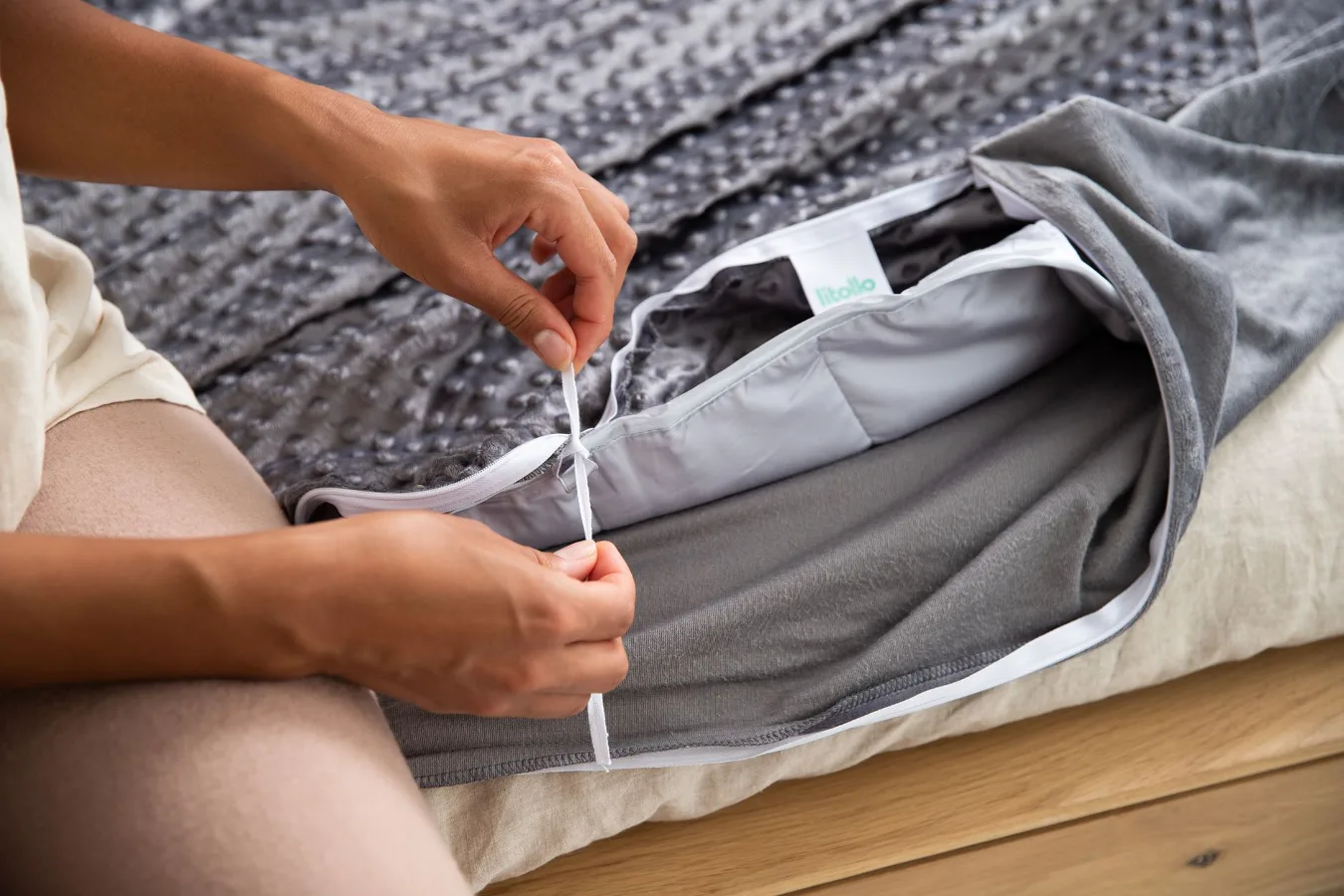
A weighted blanket duvet cover is a removable outer layer designed to protect a weighted blanket, make it easier to wash, and often make daily use less awkward. If you already own a weighted blanket, the right cover can improve comfort, reduce wear, and help you choose a surface feel that better matches the season or your sleep preferences. finding the right blanket size offers more detail on this point.
The main decision is not just which cover looks best. It is whether the cover fits the blanket properly, closes securely, feels comfortable against the skin, and is easy enough to remove and launder on a regular basis. Those practical details matter more with weighted blankets than with standard comforters because the extra weight makes handling and washing more cumbersome.
Why a weighted blanket duvet cover is worth considering
Many people buy a weighted blanket for its calming feel, then discover that cleaning and managing it is less convenient than expected. A duvet cover solves several common problems at once. It acts as a protective shell, helps limit direct contact with the blanket fill or outer fabric, and can make the blanket feel more suited to different seasons. bedding fabric comparison guide offers more detail on this point.
It also reduces friction from routine use. Without a cover, a weighted blanket may need more frequent full washing, which can be difficult depending on its size and construction. A cover gives you a washable outer layer that can absorb more of the everyday buildup from skin oils, sweat, and dust.
One overlooked benefit is handling. A weighted blanket can feel bulky and awkward when you are trying to reposition it or pull it onto the bed. A well-fitted cover with a secure closure can make the whole setup easier to manage, especially if the blanket is large or heavily weighted.
What matters most when choosing one
Fit and size compatibility
Size is the first thing to check. A weighted blanket cover should match the blanket’s dimensions closely enough that the blanket does not bunch, slide, or leave excess fabric shifting around inside. Unlike a standard duvet, a weighted blanket often has more structural heft, so a loose cover can feel messy and uneven.
Look for the exact blanket dimensions rather than assuming a general bed size will work. A blanket sold as queen size may still vary in shape or filling distribution, and some weighted blankets are intentionally smaller than the mattress they sit on. The cover should follow the blanket, not just the bed label.
If the cover is too large, the blanket can migrate inside the shell and create cold spots or uneven pressure. If it is too small, insertion becomes frustrating and the seams may be stressed over time.
Closure type
Closure style affects both convenience and security. Zippers are common because they keep the blanket enclosed and usually offer the cleanest look. Buttons or ties can work too, but they may be slower to fasten and may feel less secure if the blanket is moved around often.
For a weighted blanket, a secure closure matters more than with lighter bedding. The added weight can pull against the opening, especially if the blanket is adjusted frequently or washed often. A closure that is easy to open but difficult to accidentally split is usually the most practical choice.
Also consider where the closure sits. Some covers place the opening at the bottom edge, which can make the cover less noticeable during use. Others use side openings or corner ties. The best option depends on how you make the bed and whether you expect to remove the cover regularly.
Fabric feel and breathability
The fabric you choose changes how the blanket feels against your body and how well it works across seasons. Cotton is often a versatile option because it tends to feel familiar, breathable, and easy to live with. It can be a practical choice if you want a cover that works in more than one season.
Microfiber and minky-style covers can feel softer or warmer, which may appeal if you want a cozier surface. The trade-off is that plush fabrics may hold more warmth and may not suit hot sleepers as well. Flannel can also feel warm and comfortable, but it may be less ideal if you need a cooler setup.
Breathability is especially important for weighted blankets because the weight itself can already feel enveloping. If you sleep warm, a heavy, plush cover can make the setup feel too insulating. If you sleep cold or use the blanket in a cooler room, a warmer cover may be an advantage.
Ease of washing and drying
Maintenance is one of the strongest reasons to buy a duvet cover in the first place, so the care instructions should be straightforward. A cover that is machine washable and reasonably easy to dry is usually more practical than one with special cleaning requirements.
Check whether the fabric tends to wrinkle, shrink, or require delicate handling. A more demanding cover can undermine the convenience you were trying to gain. If you plan to wash the cover regularly, choose something that fits your routine rather than something that only looks appealing on the shelf.
It is also worth considering how bulky the fabric becomes when wet. Some thicker materials can take longer to dry, which matters if the cover is your main washable layer and you want it back on the bed quickly.
Texture and skin sensitivity
Since the cover sits closest to your body, texture matters more than many shoppers expect. Seams, rough weaves, and dense textures can be irritating if you are sensitive to scratchy bedding or if you sleep without additional sheets.
If your skin is easily bothered, look for smooth, low-friction fabrics and well-finished seams. People who prefer a cooler, cleaner feel often choose tightly woven cotton. Those who like a plush texture may prefer a softer pile fabric, but they should think carefully about heat buildup and lint.
A common misconception is that all soft fabrics are equally comfortable. In practice, softness, breathability, and temperature regulation do not always line up. A cover can feel pleasant to the touch yet still trap too much heat for comfortable sleep.
Practical ways to choose the right cover
Match the cover to how you use the blanket
Your use case should guide the purchase. If the blanket stays on a bed year-round, durability and easy laundering may matter most. If you move it between rooms or use it on a sofa, you may value a cover that is easier to remove and refasten.
If the blanket is for a child or teen, simplicity is especially important. A cover with an intuitive closure is easier to manage than one that requires careful alignment every time. For adults who use the blanket nightly, the balance between comfort and maintenance often matters more than appearance alone.
If you plan to swap covers seasonally, it can be useful to choose a neutral base material and add a warmer or cooler alternative later. That gives you flexibility without forcing one fabric to do everything.
Think about weight distribution and friction
Weighted blankets can shift inside loose covers if the shell is slippery or oversized. That can make the blanket feel uneven and can be annoying when you are trying to keep the weight centered. A cover with enough structure to hold the insert in place is often more practical than a very slick exterior. weighted blanket covers offers more detail on this point.
Some covers use internal ties or corner attachments to help anchor the blanket. Those features can improve stability, though they add a little extra setup time. If you struggle with the blanket sliding around, internal attachment points may be worth prioritizing.
At the same time, a highly textured cover can create too much drag when you are trying to adjust the blanket. The ideal surface is stable without being stiff.
Consider the look of the room, but do not lead with it
Color and texture matter, especially if the blanket stays visible on the bed. Still, aesthetics should come after function. A beautiful cover that is hard to wash, too warm, or badly sized will quickly become annoying.
Neutral tones are usually the easiest choice if you want the blanket to blend into the room. If the blanket doubles as a decorative layer, then fabric texture becomes part of the room’s overall look. Just make sure the styling choice does not compromise daily comfort.
Common mistakes to avoid
- Buying by mattress size alone. Weighted blankets and their covers should be matched to the blanket dimensions, not just the bed label.
- Ignoring closure quality. A weak closure can open under the blanket’s weight or make laundering more frustrating.
- Choosing a fabric that is too warm. Plush fabrics can be cozy, but they may be uncomfortable for hot sleepers.
- Overlooking care instructions. If the cover is difficult to wash or dry, you lose much of the convenience benefit.
- Assuming every cover is interchangeable. Some weighted blankets need a tighter fit or attachment points to stay evenly distributed.
When a duvet cover is not the best solution
A duvet cover is helpful, but it is not always the right answer. If your weighted blanket already has a durable, washable outer fabric and you rarely need to launder it, an extra cover may feel unnecessary. The same is true if you strongly prefer the original fabric feel and do not want another layer between you and the blanket.
For some people, the bigger issue is heat. Adding a cover can make the blanket feel noticeably warmer, especially with plush fabrics. If you already sleep hot, you may prefer a lighter sheet combination or a breathable top layer instead of a thicker enclosed cover.
If your main concern is keeping the blanket clean while changing the surface feel, a cover is a smart choice. If your main concern is temperature control, you may need to choose fabric carefully or consider using the blanket only in cooler months.
Helpful alternatives and complements
If a full weighted blanket duvet cover seems like too much maintenance, there are a few related options to consider.
- Washable outer blanket covers for easier spot cleaning and upkeep.
- Lightweight top sheets that reduce direct contact without adding much warmth.
- Seasonal blanket swaps if you only use the weighted blanket at certain times of year.
- Protective bedding layers that help limit wear on the blanket itself.
These options can work well if you want to reduce cleaning burden without committing to a heavier or warmer setup.
How to decide quickly
If you want the simplest decision path, start with three questions. First, does the cover match the blanket’s actual dimensions? Second, will the fabric feel comfortable for the way you sleep? Third, is the care routine easy enough that you will actually use it?
If you answer yes to all three, you likely have a good candidate. If one answer is no, that weakness may matter more than any style feature or decorative detail. With weighted blankets, practical comfort usually beats novelty.
A good weighted blanket duvet cover should make the blanket easier to live with, not merely nicer to look at. The best option is the one that supports your sleep routine, holds the insert securely, and stays manageable over time.
FAQ
Do you need a duvet cover for a weighted blanket?
No, but many people find one useful. It can make cleaning easier, protect the blanket, and give you a different fabric feel without replacing the insert.
What fabric is best for a weighted blanket cover?
There is no single best fabric for everyone. Cotton is a practical all-around choice, while plush fabrics feel warmer and softer. The right pick depends on whether you sleep hot, cold, or somewhere in between.
Should a weighted blanket cover be the same size as the blanket?
Yes, the cover should closely match the blanket’s actual dimensions for the most secure fit. Relying only on bed size can lead to bunching or shifting.
Are zipper closures better than buttons?
Often, yes. Zippers usually keep the blanket enclosed more securely and make the cover easier to use. Buttons can still work, but they may be slower and less secure under a heavy insert.
Can a weighted blanket cover make the blanket too hot?
It can, especially if the cover is made from plush or insulating fabric. If you sleep warm, choose a more breathable material and avoid layering too much warmth on top.
