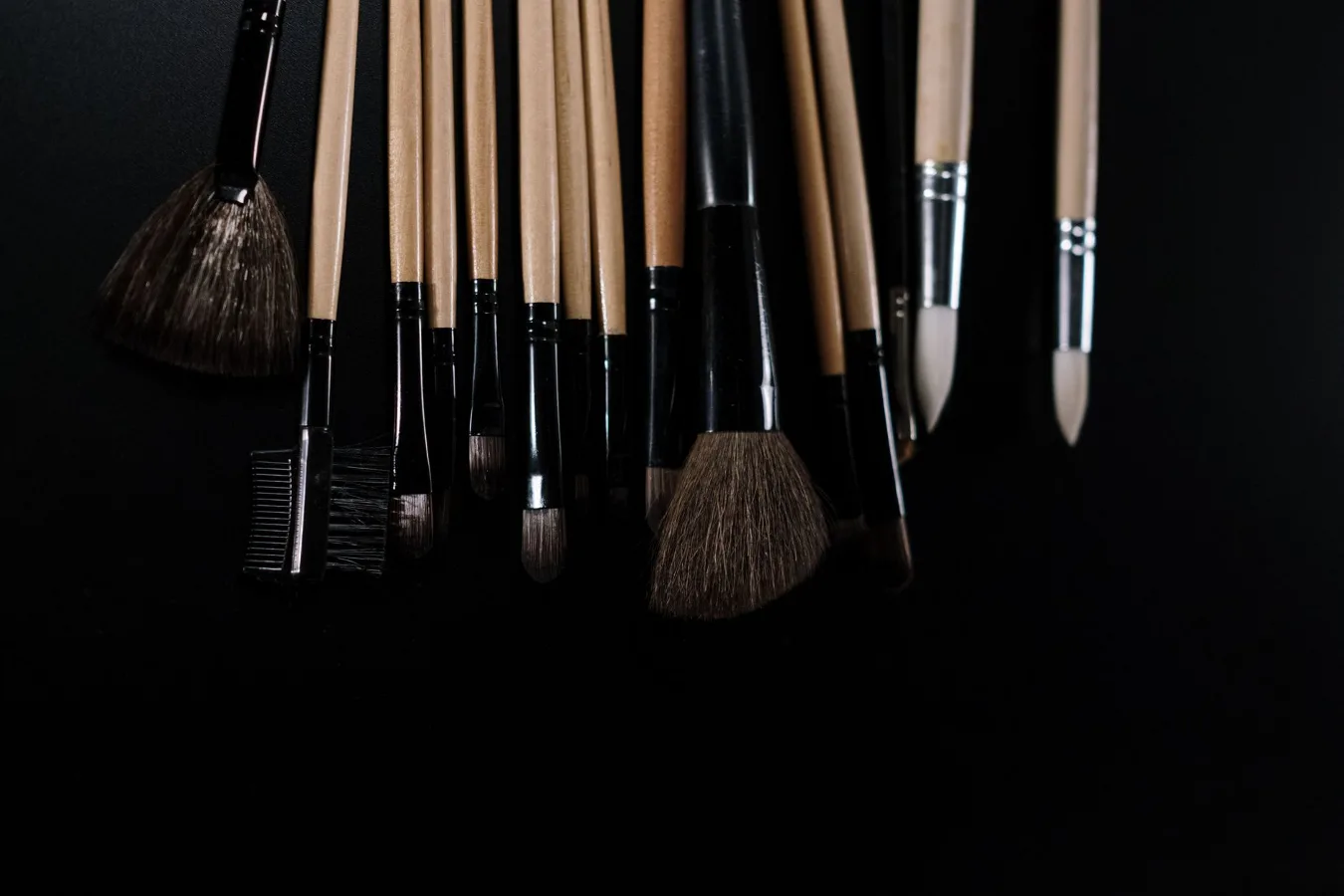
If you’re shopping for vegan makeup brushes, the main question is not just whether a brush is animal-free. It’s whether the brush actually performs well for the formulas you use, feels comfortable in hand, and holds up after repeated washing. A good vegan brush can handle everyday makeup beautifully, but the quality varies a lot more than the label sometimes suggests.
The safest way to shop is to focus on three things: bristle material, brush construction, and use case. Some vegan brushes are made for liquid and cream products, others are better for powder, and a few are versatile enough to do both reasonably well. Choosing by finish and product type will get you much closer to the right pick than choosing by appearance alone.
What makes a makeup brush vegan?
Vegan makeup brushes are made without animal-derived materials in the bristles and, in some cases, in other parts of the brush as well. That usually means synthetic fibers instead of animal hair. Depending on the brand, the handle, ferrule, glue, and packaging may also be designed with a vegan or cruelty-free approach, but those details are separate from the bristles themselves.
One common misconception is that “vegan” automatically means “better.” In reality, the term mainly tells you what the brush is made from, not whether it is soft, durable, or worth the price. Some synthetic brushes are excellent. Others shed, feel scratchy, or absorb too much product. The material matters, but so does the build quality.
The key factors that matter most
If you want a brush set that earns its place in your routine, compare brushes using the same practical criteria you would use for any beauty tool. Beauty guide offers more detail on this point.
Bristle type and feel
Most vegan brushes use synthetic fibers such as taklon or other engineered filaments. These can be very soft, very dense, or somewhere in between. The right feel depends on the job.
- Dense, firmer bristles usually work well for liquid foundation, cream blush, and concealer.
- Fluffier bristles tend to suit powder, setting powder, bronzer, and diffused eye shadow.
- Tapered tips can help with detail work and blending.
If you wear minimal makeup, a softer brush may feel more forgiving and easier to blend with. If you use fuller coverage formulas, a denser brush can give more control and better pickup.
Performance with your formula
Not every vegan brush performs the same way with every product. That matters more than many buyers expect.
- Liquid and cream products often pair well with synthetic fibers because they are less absorbent than many natural-hair options.
- Powder products usually benefit from a brush that releases product evenly instead of packing it on too heavily.
- Eyeshadow application depends on whether you want packing, blending, or precise detail work.
A brush that is excellent for buffing foundation may not be ideal for blending eyeshadow. If you need only a few brushes, choose based on the products you use most often rather than buying a large set with tools you won’t reach for.
Brush shape
Shape affects how the brush behaves more than many first-time buyers realize. A flat foundation brush, a rounded kabuki, an angled contour brush, and a tapered blending brush all create different results even when they use similar fibers.
For example, a flat top brush gives more coverage and a more polished finish, while a fluffy dome brush spreads product more lightly. If you prefer a softer, more diffused look, choose shapes that do the blending for you. If you like precision, look for tighter shapes with clear edges.
Handle and ferrule construction
Good vegan brushes are about more than bristles. The handle should feel balanced, not overly light or flimsy. The ferrule should be secure and not wobble at the joint. Poor construction is one of the fastest ways a brush becomes frustrating to use, even if the fibers themselves are nice.
Pay attention to how the brush is assembled. If the handle feels loose, the ferrule bends easily, or the bristles shed early, the brush probably won’t last long enough to justify the purchase.
Ease of cleaning
Synthetic bristles are often easier to clean than animal hair because they typically do not trap oils and pigments in the same way. That does not mean they stay clean on their own, but it can make maintenance simpler.
If you use liquid and cream makeup often, easy cleaning becomes a major advantage. Brushes that dry quickly and rinse out cleanly are more practical for regular use, especially if you rotate only a small set.
Which vegan brushes are worth prioritizing?
If you are building a collection from scratch, a few brush types usually give the most value first. This is where many buyers overspend on specialty pieces before covering the basics.
Foundation brush
Choose this if you wear liquid or cream base makeup regularly. Look for a dense synthetic brush or a buffing style that can spread product without streaking. If you prefer sheer coverage, a softer brush may be enough. For fuller coverage, a more compact shape usually performs better.
Powder brush
A good powder brush should feel soft, airy, and large enough to distribute product lightly. If a brush is too dense, it may pick up more powder than you want. If it is too sparse, you may need to work harder to build coverage.
Concealer brush
For spot concealing or under-eye work, smaller synthetic brushes tend to give the most control. A slightly tapered shape can help place product precisely without dragging.
Blending brush
This is one of the most useful eye brushes to own. A fluffy synthetic blending brush helps soften edges and diffuse shadow. If you only want one or two eye brushes, this is usually a smart starting point.
Detail brush
A small detail brush can be useful for lower lash line work, inner corner highlight, or small corrections. It is not essential for everyone, but it can make precise eye looks much easier.
Benefits of choosing vegan makeup brushes
The biggest benefit is straightforward: they avoid animal-derived hair. For many shoppers, that aligns with personal values. But there are also practical reasons people prefer them.
- Wider accessibility for people who want a cruelty-free routine
- Often easier to clean with cream and liquid makeup
- Good variety of textures and shapes across brands and price ranges
- Suitable for sensitive users when the fibers are soft and well-made
There is also a quiet advantage that gets overlooked: synthetic brushes can be more predictable across product types because the fiber behavior is engineered. That can make the learning curve easier for beginners who want consistent results.
Limitations to keep in mind
Vegan does not automatically mean premium. Some synthetic brushes are excellent, but some are too slick, too floppy, or too stiff for a polished finish. A low-quality brush may also shed or lose shape faster than expected.
Another limitation is that not all synthetic bristles feel identical. Some are silky and flexible; others are springier or slightly draggy. That difference matters if you are sensitive to texture or prefer a very specific application style.
Finally, brush sets can look appealing on paper while including tools that do not match your actual routine. If you rarely use contour, for example, a large set may give you more brushes than value. A smaller, better-chosen selection is often the smarter buy.
How to judge quality before you buy
Since you usually can’t test brushes in person online, use the product details as your filter.
- Read the brush shape carefully and match it to the product you use most.
- Look for construction details such as secure ferrules and balanced handles.
- Check whether the brush is designed for powder, cream, liquid, or all-purpose use.
- Pay attention to the finish description if you want a natural look versus full coverage.
- Consider whether the set has overlap or whether every brush has a clear role.
One practical nuance: a brush set that includes many eye brushes can still be disappointing if the bristles are too similar. Variety in shape matters more than sheer count. A thoughtful five-brush kit may be more useful than a crowded 20-piece set that repeats the same function.
Choosing brushes by makeup style
Your routine should decide the brush, not the other way around. Here is a simple way to narrow the field.
For everyday minimal makeup
If you use tinted moisturizer, concealer, cream blush, and a bit of powder, look for soft synthetic brushes that do more than one job. A foundation brush, a small concealer brush, and a blending brush may be enough.
For full-face makeup
If you use layered base products, powder, bronzer, blush, and eye shadow, a more complete brush set makes sense. In that case, prioritize distinct shapes for each step so you do not struggle with product crossover.
For beginners
Beginners usually do best with brushes that are forgiving and easy to clean. Dense but not too stiff, soft but not too airy, and shapes that make blending easier rather than harder. Avoid overly specialized brushes until you know which techniques you actually use.
For sensitive skin
Look for soft, tightly finished bristles with no rough edge near the tip. Even with vegan brushes, the feel can vary enough to matter. If a brush tugs or scratches during swatching, it is unlikely to become more comfortable with use.
Care and maintenance that protect your investment
Brush care affects performance just as much as the initial purchase. Even a good vegan brush can become unpleasant if product buildup hardens the fibers or if the handle starts loosening.
- Wash brushes regularly according to how often you use them.
- Rinse thoroughly so cleanser does not stay trapped near the ferrule.
- Reshape the bristles gently after washing.
- Let brushes dry flat or angled downward where possible.
- Store them where the bristles won’t get crushed.
Many users also make the mistake of soaking brushes for too long. That can weaken the adhesive over time, especially around the ferrule. Gentle, regular cleaning is usually better than aggressive deep cleaning after every use.
Vegan brushes versus other alternatives
If you are comparing options, it helps to separate the material question from the performance question.
- Vegan synthetic brushes are the best fit for people who want animal-free materials and easy cleaning.
- Natural-hair brushes may appeal to users who prefer a different feel or product pickup, but they are not vegan.
- Makeup sponges can be a useful alternative for base products, especially if you prefer sheered-out foundation or cream blending.
For many people, the smartest routine uses both brushes and sponges. Brushes handle precision, powders, and controlled blending, while sponges can soften edges and help with certain base formulas. If you are building a minimal kit, a few well-chosen vegan brushes usually cover more tasks than a single alternative tool.
A practical buying approach
If you want the most useful vegan makeup brushes for your routine, start with your formulas and finish preference. Then narrow choices by brush shape, density, and how much maintenance you are willing to do. That approach is more reliable than shopping by brush count or packaging.
For many buyers, the best path is a small core set first, then a few additions once you see where your routine needs more precision. That keeps the kit focused and reduces the chance of buying brushes that duplicate each other.
If you are comparing vegan makeup brushes for the first time, remember the key trade-off: the most affordable option is not always the best value, and the largest set is not always the most useful. A well-made brush in the right shape will usually beat a bigger set that does the job poorly. best makeup brush set offers more detail on this point.
