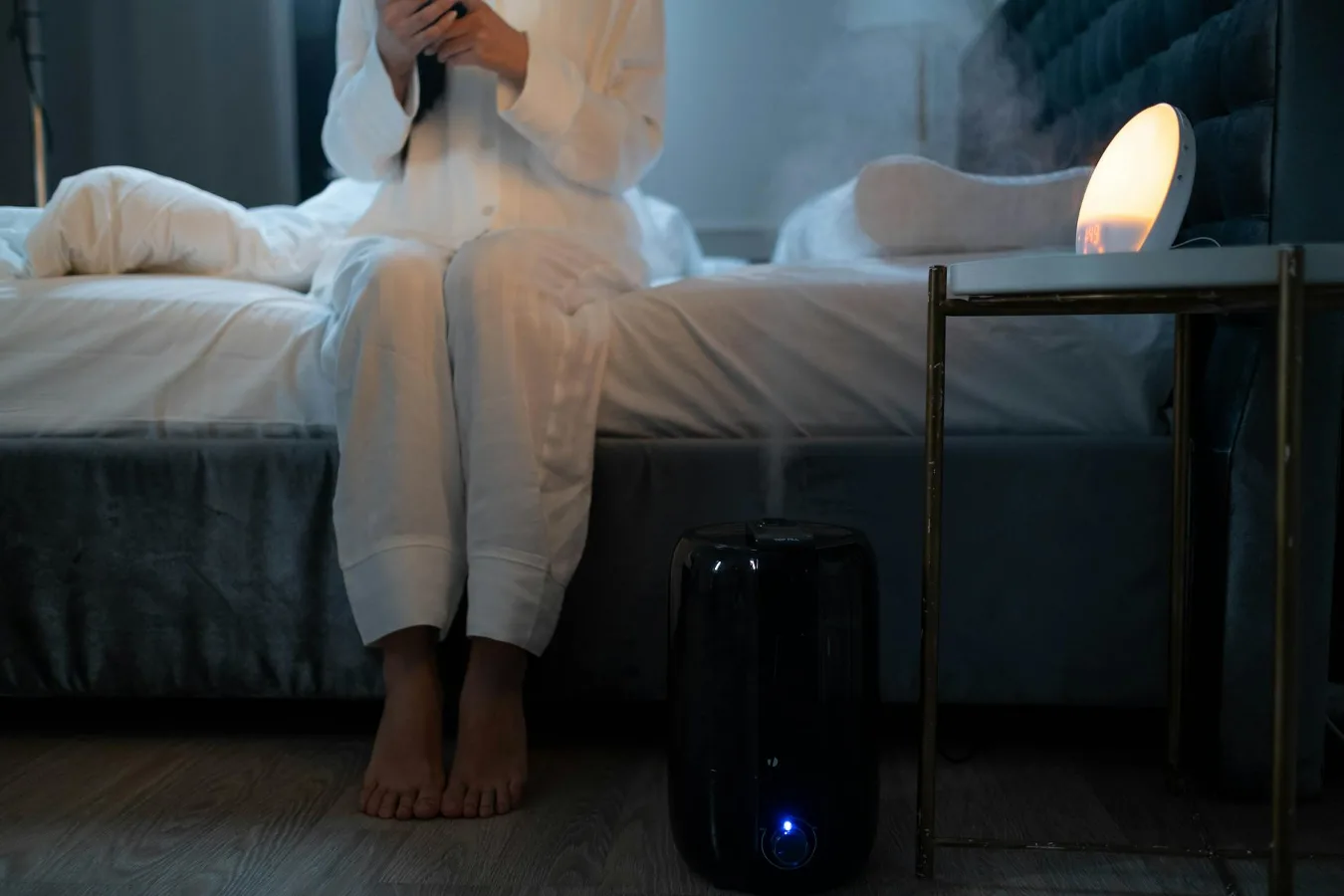
A cool mist ultrasonic humidifier is a practical choice if you want to add moisture to dry indoor air without using heat. It uses high-frequency vibrations to create a fine mist, which many people prefer for bedrooms, nurseries, and other spaces where quiet operation matters. why quiet operation matters in a bedroom humidifier offers more detail on this point.
The right model depends less on the word “ultrasonic” and more on how you plan to use it. Room size, cleaning habits, noise sensitivity, water quality, and whether you want filters all affect whether a cool mist ultrasonic humidifier will be a good fit.
When a cool mist ultrasonic humidifier makes sense
This type of humidifier is most useful when dry air is making a room less comfortable. Common reasons people look for one include dry skin, scratchy throat, static electricity, stuffy-feeling air, or discomfort during sleep. It can also be a sensible option in winter, when indoor air often feels drier because heating systems reduce humidity.
Ultrasonic models are often chosen for spaces where low noise is a priority. Because they do not rely on a fan in the same way evaporative units do, many shoppers consider them for bedside use, baby rooms, or work areas where a louder background hum would be distracting.
They are not the best answer for every situation, though. If you need a humidifier for very large spaces, if your water is hard, or if you want a design that is less likely to leave white dust, another type may suit you better.
How ultrasonic cool mist humidifiers work
Ultrasonic humidifiers use a small vibrating component to break water into tiny droplets. Those droplets become a visible cool mist that leaves the device and disperses into the room. No heating element is required for the mist itself, which is one reason these units are often marketed as energy-efficient and quiet.
That basic mechanism creates both advantages and trade-offs. Quiet performance is the obvious benefit. On the other hand, the mist can carry dissolved minerals from tap water into the air, which may contribute to fine white residue on nearby surfaces in some homes. That issue is not a defect in every unit; it is a common real-world constraint to understand before buying.
Step-by-step criteria for choosing one
1. Start with the room size
The first question is where the humidifier will live. A bedroom, nursery, office, or small living area usually has different needs from an open-plan main floor. Check the product’s intended room coverage rather than assuming any compact model will work everywhere. A small ultrasonic humidifier can be excellent close-up but underwhelming in a larger room.
If you mainly want bedside comfort, portability and quiet output may matter more than coverage. If you want to support multiple people in a larger shared room, look more carefully at tank size, mist output control, and whether the humidifier is designed for longer runtime.
2. Decide whether you want a filter
Some cool mist humidifiers use filters, while many ultrasonic models do not. A filter can help with certain maintenance tasks, but it also adds a recurring replacement consideration. Filterless designs may feel simpler, yet they can make water quality more visible in use because minerals stay in the tank or get dispersed as residue.
There is no universal winner here. If you prefer lower upkeep complexity, a filterless ultrasonic humidifier may appeal to you. If your water conditions make mineral buildup more noticeable, a filtered design or distilled water may be worth considering.
3. Think about cleaning before anything else
Many shoppers focus on mist style and overlook cleaning access. That is a mistake. Any humidifier can become inconvenient if the tank opening is hard to reach, the base has awkward corners, or the parts are difficult to dry. Since standing water can create maintenance concerns, easy cleaning should be one of your main filters.
Look for a design with a wide tank opening, straightforward disassembly, and parts you can rinse without struggling. If the product description makes cleaning sound like a chore, that usually matters more in daily life than a small feature difference.
4. Match the noise level to the room
Ultrasonic humidifiers are often quieter than fan-based models, but “quiet” is not the same as silent. Some produce a faint mechanical buzz or a light water sound, especially at higher output settings. If you are especially sensitive to sound while sleeping, read the design details carefully and favor models with simple controls that let you lower output.
Noise is one of the most overlooked considerations because many people assume all cool mist units are bedroom-friendly. In practice, mist output, water level, and nearby placement can affect how noticeable the unit feels at night.
5. Consider your water quality
Water quality plays a bigger role in ultrasonic humidifiers than many first-time buyers expect. If your tap water is mineral-rich, you may notice residue on nearby furniture or the humidifier itself. Distilled water can reduce that issue, but it adds ongoing cost and inconvenience. That trade-off is worth weighing before you choose this style.
If you want a humidifier for occasional use and are comfortable maintaining it, water quality may be manageable. If you want the least demanding setup possible, an evaporative humidifier may be easier in some households.
What the best use cases look like
A cool mist ultrasonic humidifier tends to fit best in situations where quiet operation, compact size, and easy room-to-room movement matter more than whole-home coverage. It is often a good match for:
- Bedrooms where low noise is important
- Nurseries where a softer sound profile is preferred
- Home offices where background noise is disruptive
- Small rooms that need localized moisture
- Seasonal use during dry winter months
It is less compelling when you need broad humidity support across a large open space or when you want to minimize visible residue from mineral content in tap water.
Benefits worth paying attention to
Quiet performance: This is usually the leading reason shoppers choose ultrasonic technology. For sleep and concentration, less noise can matter more than extra features.
Cool mist output: Because there is no heated water involved in making the mist, the unit remains a practical option for households that want a cool-output design.
Compact footprint: Many ultrasonic humidifiers are easy to place on a nightstand, dresser, or desk without taking over the room.
Simple daily use: Basic controls are often straightforward, making them easy to add to a routine.
Trade-offs and limitations
Ultrasonic humidifiers are convenient, but they are not maintenance-free. The biggest limitation is cleaning discipline. If you let water sit too long, or if you ignore buildup, performance and cleanliness can suffer.
Another common limitation is mineral dust or residue in homes with hard water. Some people do not notice this at all; others find it frustrating enough to switch to distilled water or a different humidifier type. That is a practical decision, not a quality verdict.
They also may not be ideal if you want a more forgiving system that can handle neglect better. Evaporative units often use a fan and wick system that may be easier in some situations, though they are typically less quiet. So the choice often comes down to what you value more: silence or tolerance for rougher water conditions and different maintenance trade-offs.
Examples of shopper profiles
If you want a quiet bedroom humidifier
An ultrasonic cool mist model is often the first place to look. Prioritize sleep-friendly controls, low-light indicators, and a layout that makes nighttime refills less annoying.
If you want the easiest low-maintenance option
Look beyond ultrasonic and compare evaporative models too. A cool mist ultrasonic humidifier can still work well, but only if you are comfortable with regular cleaning and possible mineral management.
If you need one for a nursery
Focus on stability, simple operation, and easy cleaning. A nursery humidifier should be easy to refill without splashing and should not introduce unnecessary noise or complexity.
If you have hard water
Consider whether you are willing to use distilled water, clean more often, or choose a different humidifier style. This is one of the most important practical constraints for ultrasonic models.
Checklist before you buy
- Confirm the room size the humidifier is meant to serve
- Check whether the model uses a filter or is filterless
- Look for a tank that is easy to open and clean
- Compare noise claims with user feedback if available
- Decide whether distilled water would be realistic in your routine
- Check for adjustable mist settings rather than a single output level
- Consider how easy it will be to refill at night or in the morning
- Review safety and stability if the humidifier will be used around children
Common mistakes to avoid
Choosing by appearance alone: A sleek design is nice, but cleanability and fit for the room matter more.
Ignoring humidity control: More mist is not always better. Over-humidifying a room can make it feel damp and uncomfortable.
Overlooking water quality: A humidifier that seems simple in the store can become high-maintenance in a hard-water home.
Assuming all cool mist units are the same: Ultrasonic, evaporative, and other cool mist styles behave differently in daily use.
Skipping maintenance planning: If you are not willing to clean the unit regularly, choose a design that better matches your habits.
Alternatives worth comparing
If you are still deciding, it helps to compare a cool mist ultrasonic humidifier with a few common alternatives.
- Evaporative humidifier: Often quieter than warm mist, but usually louder than ultrasonic because of the fan.
- Warm mist humidifier: Can feel different in use and may appeal to people who prefer heated output, though it is a separate category with its own trade-offs.
- Whole-room humidification approach: Better for larger spaces, though it can be less portable and more involved.
The best option depends on whether your top priority is quiet operation, maintenance simplicity, room coverage, or minimizing residue.
Practical buying checklist
Before you settle on a model, ask yourself these questions:
- Will this sit in a bedroom, nursery, office, or larger shared space?
- Am I comfortable cleaning it regularly?
- Do I want to use tap water, filtered water, or distilled water?
- Is quiet operation more important than maximum output?
- Do I want a filterless design or one with a replaceable filter?
- Will I need a model that is easy to move and store?
If you can answer those clearly, choosing becomes much easier. That is the real advantage of shopping for a cool mist ultrasonic humidifier with a decision framework instead of a spec sheet alone.
FAQ
Is a cool mist ultrasonic humidifier better for sleeping?
It can be, especially if you prefer a quieter unit near the bed. Sleep comfort depends on more than noise, though, so cleaning ease and mist output settings still matter.
Do ultrasonic humidifiers leave white dust?
They can, particularly if hard tap water is used. The amount varies by water quality, settings, and the room environment.
Should I use distilled water in an ultrasonic humidifier?
Distilled water can help reduce mineral residue, but it is not always necessary. Whether it is worth it depends on your water quality and how much maintenance you want to do.
Are cool mist ultrasonic humidifiers safe for nurseries?
They are commonly used in nurseries because they do not use hot steam, but safety still depends on stable placement, clean operation, and appropriate humidity levels.
How often should I clean one?
Follow the manufacturer’s instructions, since maintenance needs vary. In general, regular cleaning matters because standing water and mineral buildup can affect performance and hygiene.
A cool mist ultrasonic humidifier is often the right pick when quiet operation and compact convenience matter most. The best choice is the one that fits your room, your cleaning habits, and your water quality without creating extra work later. Warm vs Cool Mist Humidifier: Which Fits Best? offers more detail on this point. Humidifier Warm Mist vs Cool Mist offers more detail on this point.
