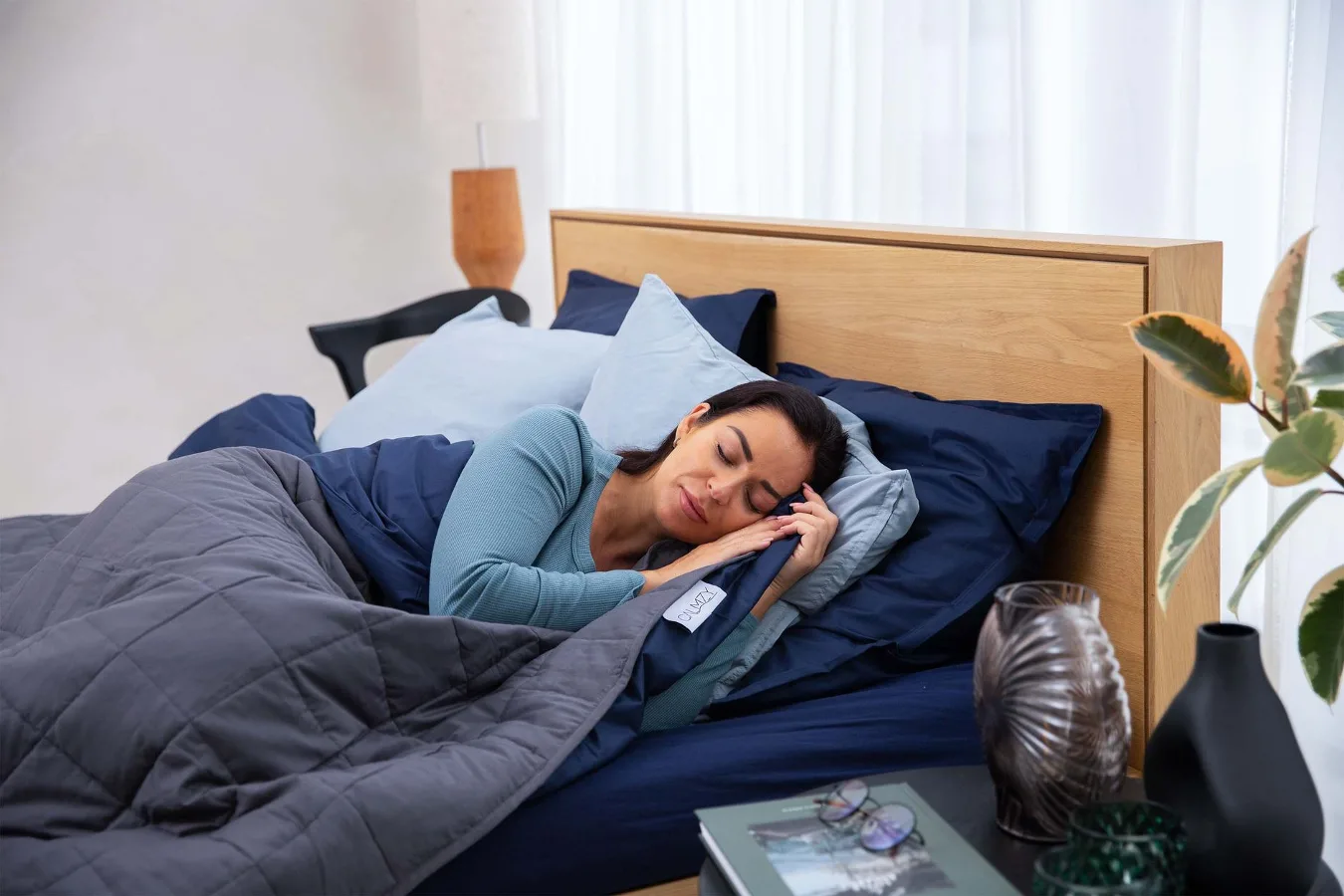
A weighted lap blanket is a smaller, more portable version of a weighted blanket designed to rest across the legs, lap, or lower torso. People usually look for one when they want gentle pressure during sitting rather than a full-bed blanket for sleep.
The right choice depends less on fashion and more on practical details: size, weight, fill, fabric, breathability, and how you plan to use it. A lap blanket that works well on a couch may feel awkward at a desk, and one that feels cozy in a cool room may be too warm for year-round use.
What a weighted lap blanket is best for
A weighted lap blanket is typically used for seated relaxation. Common situations include reading on the couch, working from home, watching TV, or settling in during travel. Some people also use one for sensory comfort, especially when they want a contained, easy-to-move textile instead of a larger blanket. sensory-friendly wellness essentials offers more detail on this point.
The main appeal is simple: it adds steady, even pressure over a limited area. That makes it easier to use in places where a full weighted blanket would be bulky or inconvenient. It is also easier to store, fold, and carry than a bed-sized version.
That said, a lap blanket is not always a substitute for a full weighted blanket. If you want coverage from shoulders to feet, or you need nighttime sleep coverage, a lap-sized option may feel too small. The best fit depends on how you plan to use it most often. cover for weighted blanket offers more detail on this point. Best Cooling Weighted Blanket Guide offers more detail on this point.
Key factors that matter most
Weight
Weight is the first decision most buyers make, but it should be considered alongside size and use case. A lap blanket should feel substantial without being difficult to reposition. If it is too heavy for your needs, it can feel restrictive rather than calming. If it is too light, the pressure effect may be subtle.
For seated use, think about how long you will wear or hold it, whether you want to drape it over your thighs only or up to your torso, and whether you may move it between rooms. A blanket that feels comfortable while stationary may become less convenient if you need to stand, reach, or shift frequently.
Size and shape
Lap blankets vary from compact rectangles to longer throw-style shapes. A smaller rectangle is often better for desks, wheelchairs, office chairs, and travel. A larger throw shape may be better on a sofa or recliner where you want more coverage across the legs and abdomen.
Shape matters because a weighted blanket that is too wide can bunch up at the edges, while one that is too narrow may slide off or leave gaps in coverage. If you want something for public or shared spaces, a less bulky size is usually easier to manage.
Fabric and feel
The outer fabric affects comfort as much as the weight itself. Soft fleece, minky-style fabric, cotton, and other woven textiles all have different strengths. Plush fabrics tend to feel cozy and insulating. Cotton and more breathable blends can be better if you run warm or plan to use the blanket for long periods.
A common misconception is that the heaviest or plushest option is automatically the most comfortable. In reality, the right feel depends on room temperature, skin sensitivity, and how much direct contact you want against the legs or arms.
Fill material
Weighted lap blankets are commonly filled with materials such as glass beads or pellets, often sewn into pockets to keep the weight distributed. What matters most is how evenly the fill is held in place and whether the blanket feels balanced across its surface.
Uneven distribution can create hard spots or shifting pressure, which defeats much of the comfort benefit. If you are comparing options, pay attention to how the fill is structured rather than focusing only on the stated weight.
Breathability and temperature
Temperature is an overlooked factor, especially for lap blankets used indoors for long stretches. Because they rest over the legs, they can trap heat more easily than a throw draped loosely over the shoulders. If you tend to overheat, breathable fabric and moderate fill are usually better than an extra-plush exterior.
For colder rooms or winter use, a warmer cover may be welcome. For year-round versatility, a more balanced fabric choice often works better than a heavy fleece that feels too warm in spring or summer.
How to match the blanket to your use case
For desk work or office seating
If you want a weighted lap blanket for a chair or desk setup, portability and modest size matter most. You need something easy to place and remove without interrupting your workflow. A compact design is usually more practical than a larger throw, especially if you change positions often.
Look for a blanket that stays put without covering too much of the seat or interfering with arm movement. If you work in a shared office or move between home and the office, a simple, foldable design is easier to manage.
For couch or recliner use
On a sofa or recliner, a wider or longer lap blanket can feel more comfortable because it covers a broader area and is less likely to slide off. This is a good use case for people who want a cozy option for evening downtime.
Since this setting is usually more relaxed, fabric feel may matter more than portability. If the blanket stays in one room, you can prioritize comfort and texture over compactness.
For travel or on-the-go comfort
Travel use adds a different set of constraints. The blanket should fold neatly, pack without excessive bulk, and work in tighter spaces such as car seats or airplane seats. A travel-friendly weighted lap blanket should feel manageable in a bag and not require constant adjustment.
In this use case, a lighter and more compact design is often easier to live with than a highly plush one. Durability also matters because travel products tend to get folded, compressed, and handled more often.
For sensory comfort
For people seeking sensory support, consistency is more important than decorative features. A stable weight distribution, soft but not irritating fabric, and a manageable size can make the blanket easier to use regularly.
Some users prefer a blanket that sits quietly on the lap without needing to be adjusted. Others want a version they can wrap around their legs or hold against the torso. Thinking through that preference before buying can prevent disappointment later.
Practical trade-offs to expect
Every weighted lap blanket involves compromise. More weight often means more pressure but also less portability. Softer plush fabrics often feel comforting but may trap heat. A larger size gives more coverage but can be harder to move and store.
There is also a difference between a blanket that feels calming for short sessions and one that remains comfortable over an entire afternoon. If you plan to use it for long periods, ease of repositioning matters more than dramatic pressure.
Another practical limitation: a lap blanket cannot solve every comfort issue. If your chair is uncomfortable, your posture is poor, or the room is too warm, the blanket may help only modestly. Treat it as one part of a comfort setup rather than a stand-alone solution.
Common mistakes shoppers make
- Choosing based on weight alone and ignoring size or fabric.
- Buying a blanket that is too large for desk or travel use.
- Overlooking heat retention, especially with plush outer fabrics.
- Assuming all fill materials feel the same.
- Not checking whether the blanket is easy to clean or care for.
- Ignoring how often the blanket will be moved, folded, or packed.
One of the biggest mistakes is treating a lap blanket like a full-size weighted blanket in miniature. The use case is different. A lap blanket should be easier to live with in sitting positions, which means ergonomics and portability deserve as much attention as the comfort feel.
How to decide what to buy
If you want the simplest decision path, start with your main use case. For desk use, prioritize compactness and manageable weight. For couch use, prioritize coverage and fabric feel. For travel, prioritize portability and easy folding. For sensory comfort, prioritize even weight distribution and a texture you can tolerate for longer periods.
Then compare the following in this order:
- Size: Will it fit the chair, lap, or seat you plan to use most?
- Weight: Is the pressure substantial without feeling cumbersome?
- Fabric: Will it stay comfortable in your room temperature?
- Fill distribution: Does the construction help keep the pressure even?
- Care: Can you realistically maintain it the way you plan to use it?
If you are undecided between two options, choose the one that matches your most common setting, not your rarest one. A blanket used daily in a home office should be optimized for that space, even if it is not the most glamorous choice for the couch.
When a different product may be the better choice
A weighted lap blanket is not always the best answer. If you want full-body coverage for sleep, a standard weighted blanket may be more appropriate. If you only want a soft layer without pressure, a regular throw blanket could be more versatile. If your goal is targeted comfort over a specific body area, a small weighted cushion or sensory pad may suit you better.
People who are sensitive to heat or restricted movement may also prefer a lighter textile or a non-weighted alternative. The right product should improve comfort without making you feel boxed in.
Care and maintenance considerations
Maintenance is worth checking before you buy because a lap blanket that is inconvenient to clean often becomes a drawer item. Look for care instructions that fit your routine, especially if the blanket will be used daily or in shared spaces.
Removable covers can be useful, but they are not a must for every buyer. If the outer fabric is easy to spot clean and the blanket is small enough to manage, that may be sufficient. The key is whether cleaning will feel realistic after ordinary use.
Storage also matters. A lap blanket should be easy to fold and put away without taking up too much room. If it will live on a chair arm, in a basket, or next to a desk, a compact shape is easier to incorporate into your environment.
FAQ
What is the difference between a weighted lap blanket and a weighted blanket?
A weighted lap blanket is smaller and intended mainly for seated use, while a weighted blanket is usually larger and designed for bed or full-body coverage. The lap version is easier to move around and better suited to couches, desks, and travel.
Can a weighted lap blanket help with relaxation?
Many people use weighted lap blankets for a sense of calm and grounding during quiet activities. The effect depends on the person, the weight, the fit, and the setting, so comfort is highly individual.
What fabric is best for a weighted lap blanket?
The best fabric depends on temperature and texture preference. Plush fabrics feel cozy, while cotton and other breathable options are often better for warmer rooms or longer use.
Is a heavier weighted lap blanket always better?
No. Heavier is not automatically better. A blanket that is too heavy can be inconvenient or feel overly restrictive, especially for desk work or frequent repositioning.
How do I choose the right one for daily use?
Choose the blanket that best matches your main environment. For daily use, balance comfort with portability, heat control, and easy care rather than focusing on the strongest pressure possible.
A good weighted lap blanket should feel useful, not fussy. The best one is usually the model that fits your routine with the least effort, whether that means a compact desk companion, a cozy couch layer, or a travel-friendly comfort piece.
