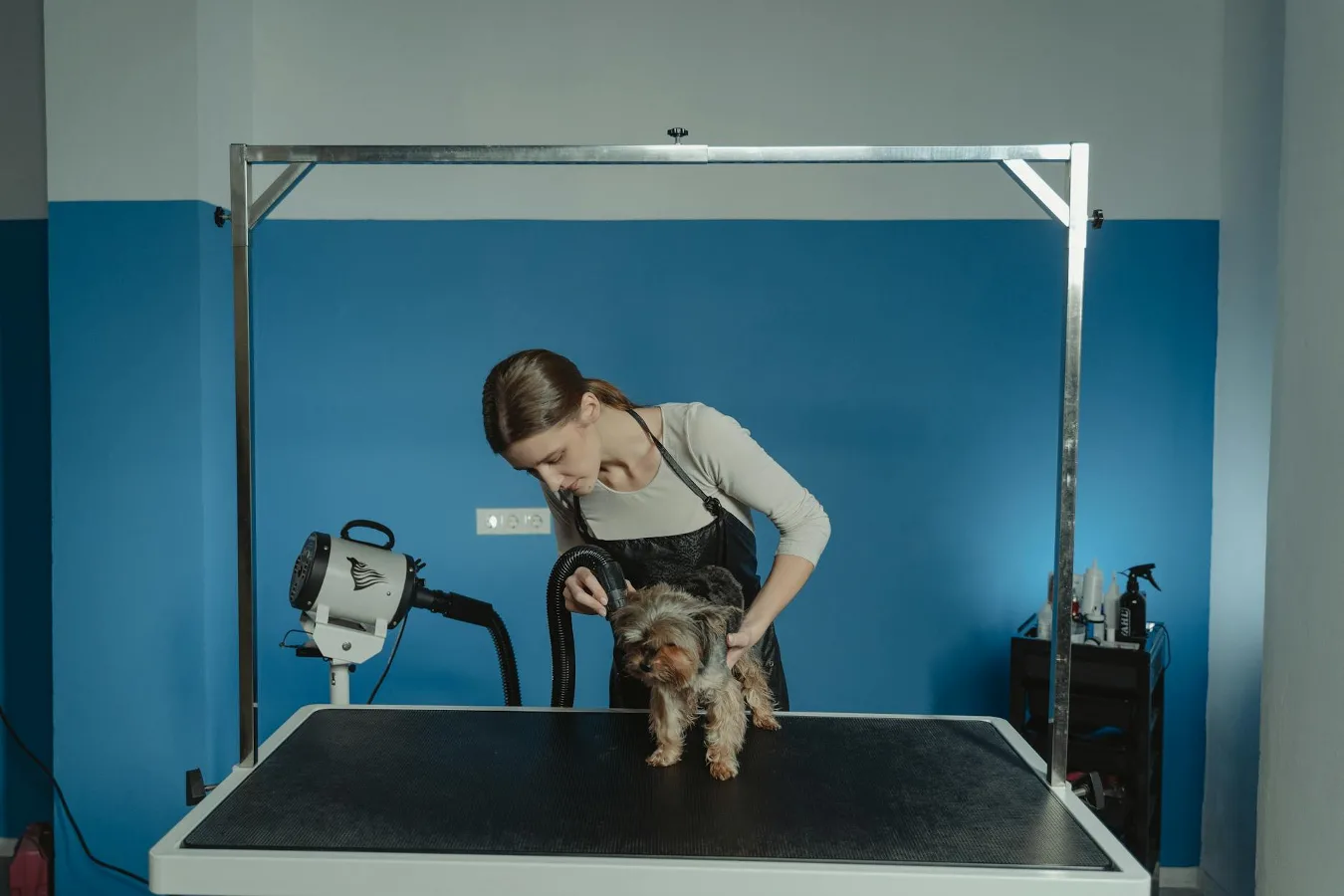
If you are shopping for a hair dryer for dogs, the short answer is this: choose a dryer that matches your dog’s coat type, tolerance for noise, and grooming routine rather than buying the most powerful model available. For many owners, the right dryer is the one that dries efficiently without making grooming stressful or unsafe. chi lava hair dryer offers more detail on this point. Standing Hair Dryer Guide for Better Styling offers more detail on this point.
Unlike a human hair dryer, a dog dryer is designed around airflow, comfort, and control. That usually means a different balance of heat, speed, and noise. The best choice depends on whether you are drying a small short-haired dog after a bath, working through a dense double coat, or trying to make home grooming easier for an anxious pet. how to bathe a dog at home offers more detail on this point.
Start with your dog’s grooming reality
The right dryer depends less on the brand name and more on how you actually groom. A dog that gets a light bath once in a while has very different needs from a breed that sheds heavily, traps water in the undercoat, or requires regular coat maintenance.
Think about these first:
- Coat type: short coat, long coat, curly coat, double coat, or hair that mats easily
- Dog size: small dogs generally need gentler airflow and easier handling
- Sensitivity: some dogs dislike loud machines, strong air, or warm air near the face
- Drying frequency: occasional bathing calls for different features than routine grooming
- Where you dry the dog: bathroom, grooming table, laundry room, garage, or outdoor space
That last point is often overlooked. A dryer that seems perfect in a product listing can feel awkward in a cramped bathroom or too loud in an apartment. Space, outlet access, and cleanup matter more than many buyers expect.
The main dryer types and who they suit
Most buyers are choosing between a few broad styles, and each one solves a different problem.
High-velocity dryers
These rely on strong airflow to push water out of the coat and speed drying. They are useful for dense coats, larger dogs, and pets that need faster drying after baths. They can be very effective, but they are not always the most comfortable option for noise-sensitive dogs.
Best for: thick coats, double coats, heavy shedders, and owners who groom regularly.
Trade-off: strong airflow can be intimidating, especially at first.
Stand dryers
These are useful when you want hands-free drying. They can make brushing and coat positioning easier because you are not holding the dryer the whole time. That convenience can matter during longer grooming sessions.
Best for: owners who groom at a station, dogs that tolerate a steadier setup, and coat drying that takes longer.
Trade-off: less flexible for quick touch-ups or dogs that move around a lot.
Handheld pet dryers
These are more compact and easier to control. They are often a practical starting point for home grooming because they are simpler to store and move around. For small dogs or occasional use, a handheld option may be enough.
Best for: smaller dogs, simple home grooming, and limited storage space.
Trade-off: can take longer on dense coats and may require more effort from the groomer.
Human hair dryers used for dogs
Some owners consider using a regular hair dryer. That can work in limited situations, but it is not ideal for every dog. Human dryers may not offer the airflow control, nozzle options, or safety features that make pet drying easier. They also may feel hotter or less comfortable for some dogs.
If you already own one, use caution and keep settings low. For regular grooming, a dryer designed for pets is usually the more practical choice.
What matters most: airflow, heat, and noise
These three features shape how useful a dryer will be in real life. A buyer guide that ignores them misses the point.
Airflow
Airflow is one of the most important factors because drying efficiency depends on moving water off the coat, not just warming it. Strong airflow can save time, but more force is not automatically better. Sensitive dogs may do better with moderate airflow and a gradual introduction.
Consider how the dog reacts to loud vacuums, blenders, or grooming clippers. A dog that is nervous around sound may need a quieter, gentler model even if the drying process takes longer.
Heat settings
Heat should be treated as a comfort feature, not the main drying method. Too much heat can make the experience unpleasant and may increase the risk of skin discomfort. Many buyers assume hotter means faster, but that is not always the safest or most comfortable approach for dogs.
Look for adjustable settings and a dryer that can be used primarily with airflow rather than high heat. For dogs with short coats or sensitive skin, lower heat or even cool-air operation may be preferable.
Noise level
Noise matters as much as performance for many dogs. A powerful dryer that the dog refuses to tolerate is not a good buy. For nervous pets, a quieter model may be worth choosing even if it is less aggressive in drying speed.
A common mistake is assuming a dog will get used to the sound immediately. Some do, but many need gradual conditioning, short sessions, and positive associations before they accept a dryer comfortably.
Material and build details that affect day-to-day use
Buyers often focus on power and forget the parts they will actually touch and clean. That is a mistake, especially if the dryer will be used often.
Housing and grip
A dryer should feel manageable in your hand or stable on its base. If it is too bulky, awkward, or slippery, grooming becomes harder. Weight matters more if you will be drying a large dog or need to move around the coat for a while.
Hose length and attachments
For stand or force dryers, hose length affects reach and flexibility. Attachments such as concentrator nozzles can help direct airflow into dense coats or around problem areas like the chest and legs. Narrow nozzles may help with focused drying, while broader airflow can be more comfortable for general use.
Filtration and maintenance access
Some dryers are easier to clean than others. Pet hair gets everywhere, so access to filters and vents matters. A dryer that is hard to maintain may lose performance over time or become frustrating to use.
Practical rule: if cleanup looks inconvenient now, it will feel worse after a few grooming sessions.
Match the dryer to coat type, not just breed size
Breed guides can help, but coat texture is more important than breed alone. Two dogs of the same size may need very different dryers.
- Short coats: often need less drying time, so a gentler, more compact option may be enough
- Double coats: usually benefit from stronger airflow that can reach deeper layers
- Long coats: need careful drying to help prevent tangles and uneven damp spots
- Curly coats: often require controlled drying to avoid roughing up the coat too much
- Dense or heavy coats: can justify a more powerful dryer with better airflow control
Another overlooked factor is undercoat density. Some dogs look like they dry quickly on the outside while holding moisture underneath. That hidden dampness can make grooming feel finished when it really is not.
Safety and comfort are part of the purchase decision
A dog dryer should help the grooming routine, not turn it into a battle. Safety here is mostly about temperature control, airflow management, and the dog’s stress level.
Look for:
- multiple speed or airflow settings
- heat control or low-heat operation
- stable construction or secure handling
- attachments that help direct air away from the face
- controls that are simple to adjust during use
For puppies, seniors, and dogs with anxious temperaments, comfort often matters more than raw drying speed. A calmer session may take longer, but that can make grooming more sustainable over time.
It is also wise to avoid aiming direct airflow into the eyes, ears, or nose. That sounds obvious, yet it is one of the easiest mistakes to make when a dog is wriggling or you are trying to work quickly.
Buyer scenario: which setup fits your home?
Different households need different solutions. Here are a few practical examples.
If you groom only occasionally
A compact handheld pet dryer may be enough. It is easier to store, simpler to use, and less of a commitment if your dog does not need frequent full grooming sessions.
If your dog has a thick or double coat
You will probably benefit from a more powerful dryer with adjustable airflow and useful attachments. The goal is to move water through the coat efficiently without overheating the dog or making the session unnecessarily long.
If your dog is noise-sensitive
Prioritize quieter operation, lower starting airflow, and gradual introduction. A less aggressive model that the dog accepts is more valuable than a stronger dryer that causes resistance every time you use it.
If space is limited
Storage and portability become meaningful. A smaller dryer, shorter hose setup, or simpler design may fit your home better than a large grooming station tool.
Trade-offs worth thinking through before you buy
There is no perfect dog dryer for every situation. The best option usually involves compromise.
- More power vs. more comfort: stronger airflow can speed drying, but may be harder for sensitive dogs
- More features vs. simpler use: extra settings help flexibility, but can complicate setup
- Hands-free convenience vs. mobility: stand dryers reduce hand fatigue, but limit movement
- Compact size vs. drying efficiency: small dryers are easier to store, but may struggle on dense coats
This is where buyers often make the wrong assumption. They shop for the most capable machine on paper, then discover that their dog only cooperates with a gentler routine. The best purchase is often the most usable one, not the most impressive one.
Common mistakes to avoid
- Buying by power alone: airflow matters, but so do noise and control
- Ignoring coat type: a short-haired dog and a double-coated dog do not need the same dryer
- Overheating the coat: too much heat can make drying uncomfortable
- Skipping attachment planning: nozzles and hoses can affect how useful the dryer is
- Forgetting maintenance: clogged filters and poor cleanup reduce performance
- Expecting instant acceptance: many dogs need gradual conditioning to tolerate drying equipment
How to use a dog dryer more successfully at home
Even the right dryer can go wrong if the routine is rushed. A few habits make the process easier.
- Start with a dog that is towel-blotted first, so the dryer is not doing all the work.
- Introduce the sound slowly if the dog is unfamiliar with it.
- Use the lowest comfortable setting at first and increase only if needed.
- Keep the airflow moving rather than holding it in one spot.
- Work in sections so the dog does not become overwhelmed.
- Pause when the dog seems stressed, and finish later if necessary.
For many owners, brushing while drying is also useful, especially on longer coats. That can help separate strands and reduce lingering damp spots, though it should be done gently to avoid tugging.
What to do next if you are narrowing down options
Once you know your dog’s coat type, noise tolerance, and grooming frequency, compare dryers on the features that matter most: airflow control, heat settings, ease of cleaning, attachment options, and overall comfort in your hands. If your dog is especially anxious, a quieter and simpler model may be the smarter long-term choice. If your dog has a heavy coat, performance and drying efficiency may deserve more weight.
If you are still undecided, it helps to think in terms of grooming routine rather than product category. Ask yourself whether you need a fast-drying tool, a quieter beginner-friendly setup, or a hands-free station for regular grooming. That question usually points you in the right direction faster than spec sheets do.
A hair dryer for dogs is not just a convenience item. Used well, it can make bathing less stressful, help coats dry more thoroughly, and support a cleaner grooming routine at home. The right one is the one your dog can tolerate and your household can realistically use.
