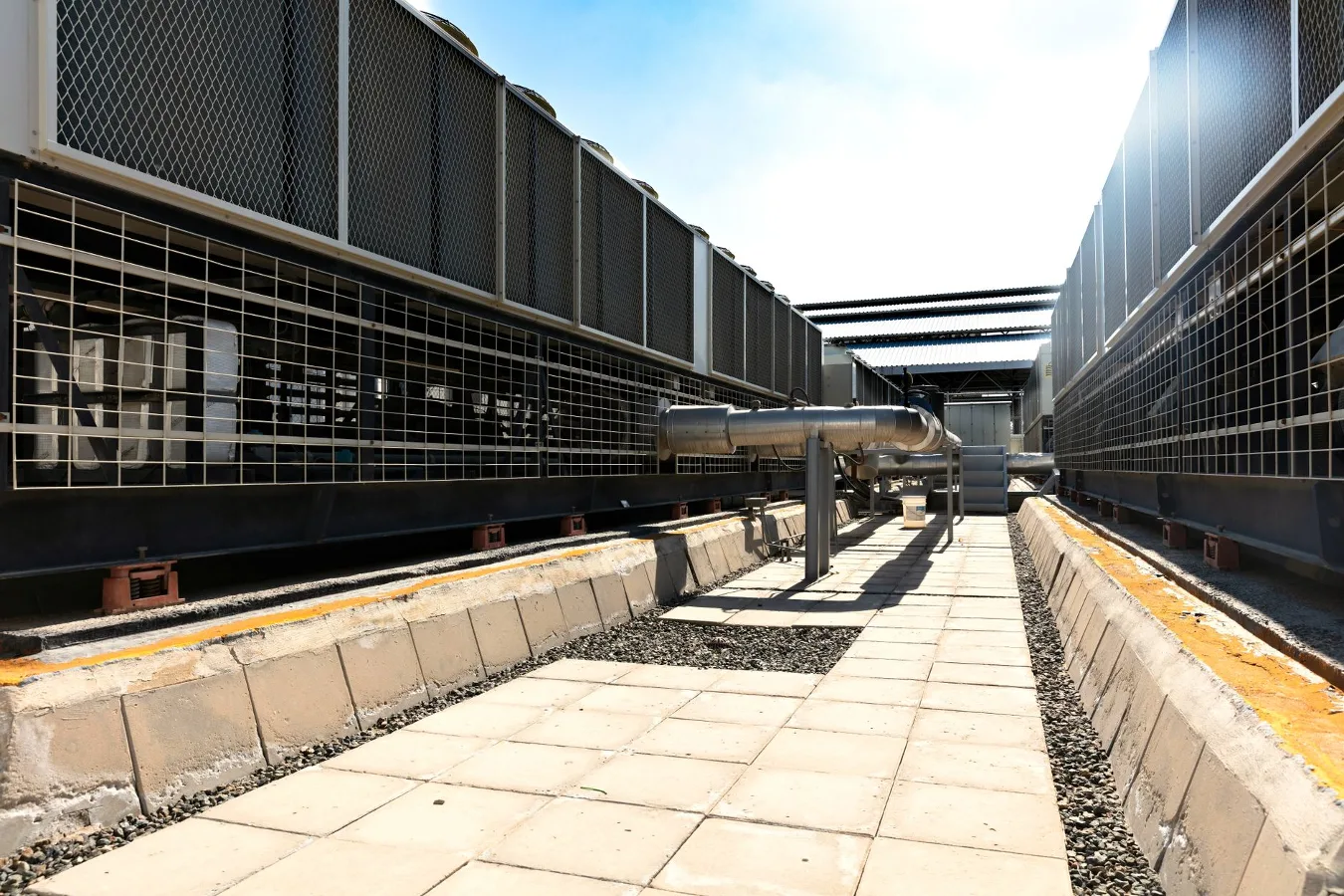
An industrial air purifier is designed for larger, harder-working environments where ordinary room purifiers are not enough. In practice, the right unit depends less on a brand name and more on what you need to control: fine dust, smoke, fumes, odors, or a mix of contaminants.
That distinction matters. A warehouse that mainly deals with dust has very different needs from a fabrication area, a commercial kitchen support space, or a healthcare-adjacent facility. Choosing well means matching the purifier to the space, the airborne problem, and the maintenance burden you can realistically support. commercial air purifier offers more detail on this point. commercial air purifier options offers more detail on this point.
What an industrial air purifier is meant to do
An industrial air purifier is a high-capacity air cleaning system used in commercial, industrial, and other demanding indoor environments. Its job is to capture or reduce airborne contaminants that can affect air quality, worker comfort, equipment cleanliness, and, in some settings, regulatory compliance. air quality basics for facilities offers more detail on this point.
Unlike a small residential purifier, an industrial model is usually built for larger volumes of air, longer run times, and more demanding filter loads. Depending on the application, it may use HEPA filtration, pre-filters, activated carbon, electrostatic stages, or combinations of these.
The common misconception is that any “big” purifier will solve every air problem. It won’t. Air cleaning is strongest when the unit’s filtration approach matches the pollutant type. Dust, oil mist, VOCs, fumes, and odors are not the same thing, and they do not all respond to the same filter media.
Start with the contaminant, not the product
The most useful way to narrow your options is to identify what you are trying to remove from the air.
- Dust and debris: Common in workshops, warehouses, woodworking spaces, and manufacturing areas.
- Fine particles: May include smoke, combustion byproducts, or very small airborne dust.
- Odors and gases: Often need carbon or other sorbent media rather than particle-only filtration.
- Fumes: May require more targeted capture than a standalone purifier can provide.
- Mixed contamination: Many facilities need a combination of particle filtration and odor control.
This is the first practical decision point. A purifier focused on particles may do little for chemical odors. A carbon-heavy unit may reduce smell but still leave fine dust in circulation if particle filtration is weak. Matching the mechanism to the contaminant saves money and frustration.
The key factors that actually matter
Airflow and room size
Industrial air purifiers need enough airflow to move air through the filter system and back into the space effectively. For a large room, open floor plan, or high-ceiling area, circulation is just as important as filter quality. A well-built purifier placed badly can still underperform.
Think about the space as a system. Open bays, partitions, shelving, and machinery all change how air moves. Dead zones can trap contaminants even when the unit is technically powerful enough on paper.
Filtration type
Filter selection should reflect the contaminant profile:
- Pre-filters help catch larger debris and protect the finer filters from clogging too quickly.
- HEPA filtration is often used where fine particle capture is a priority.
- Activated carbon is commonly used for odors and some gaseous pollutants.
- Washable or electrostatic elements may be useful in certain environments, but they are not always the best fit for every use case.
A practical nuance: some systems look impressive because they advertise multiple stages, but the real question is whether those stages are sized and configured for your environment. A modest, well-matched filtration setup can outperform a more complicated unit that is not maintained properly.
Maintenance demands
Industrial air purifiers are only useful if they stay in service. Filter replacement, cleaning schedules, and access to consumables should be part of the decision from the beginning. In facilities with heavy dust loading, filters can require more frequent attention than buyers expect.
This is one of the most overlooked considerations. A unit that performs well for a month but is difficult to service may become expensive to own, especially if staff skip maintenance because access is awkward or replacement parts are hard to track.
Noise and placement
In a production area, some noise may be acceptable. In an office-adjacent, retail, hospitality, or healthcare-related setting, noise can become a real constraint. The purifier may need to run continuously, so the sound profile matters more than many buyers assume.
Placement matters too. Units should not be tucked into a corner and forgotten. They need space for intake and exhaust, and they work better when positioned to support the natural movement of air in the room.
Energy use and operating cost
Purchase price is only part of the equation. Filters, fan power, and service time all affect long-term value. Some systems are economical upfront but expensive to maintain. Others cost more initially but may be easier to service or more durable in demanding conditions.
If a facility runs multiple units or operates long hours, operating cost becomes a real planning factor. The best choice is usually the one that fits both the air quality problem and the staffing model that will support it over time.
How different environments change the choice
Industrial air purifier needs vary widely across settings. The same unit may be acceptable in one space and unsuitable in another.
- Warehouses: Often need dust control and broad air movement more than odor removal.
- Woodshops and fabrication areas: Benefit from strong particle capture and careful attention to dust loading.
- Commercial kitchens support areas: May need odor management and grease-related air handling considerations.
- Healthcare-adjacent spaces: Tend to prioritize fine particle filtration and consistent operation.
- Fitness facilities: May need general air quality support, odor control, and reliable circulation.
- Office and retail settings: Often need quieter operation and balanced air cleaning rather than heavy-duty extraction.
A purifier is not a substitute for proper ventilation. In many facilities, it works best as a supplement to HVAC, source capture, and good housekeeping. If the contamination source is strong, removing it at the source is usually more effective than trying to clean all of it after it has spread through the room.
Practical solutions that make the biggest difference
Use a layered approach
For many commercial spaces, the best results come from combining strategies: source control, ventilation, and air purification. That may mean using local exhaust near the source, keeping materials sealed, cleaning dust before it becomes airborne, and placing air purifiers where circulation is weak.
Match the filter to the job
If fine particles are the main issue, particle filtration should be the priority. If the main complaint is odor, look closely at carbon capacity and replacement logistics. If both are present, a blended system may be necessary.
Plan for filter access
Ease of use is not a luxury in a commercial setting. If filters are difficult to reach, install, or replace, maintenance is less likely to happen on schedule. Select a design that your team can service without interrupting operations more than necessary.
Think about airflow paths
One purifier in the wrong spot can create a false sense of security. The goal is not simply to move air; it is to move contaminated air through the filtration path efficiently. That often means considering doors, vents, machinery, shelving, and where people actually work.
Limitations worth understanding before you buy
Industrial air purifiers are useful, but they are not magical fixes. They do not eliminate a contamination source. They do not remove all airborne hazards in every setting. And they do not replace engineering controls, ventilation design, or safety procedures when those are required.
That limitation is especially important in environments involving chemical exposure, heavy dust generation, or fumes. In those cases, a purifier may reduce background contamination but still leave a serious source problem untouched. Buyers sometimes expect a single unit to do the work of an entire air management strategy. That is rarely realistic.
Another constraint is saturation. If the space produces a lot of particulate or odor load, filters can become overwhelmed quickly. An industrial purifier can still help, but it may require more frequent maintenance or need to be paired with a better source-control approach.
Common mistakes buyers make
- Choosing by size alone: A larger cabinet does not guarantee better real-world performance.
- Ignoring the contaminant type: Particle filtration and odor control are different challenges.
- Underestimating maintenance: Service access and replacement intervals matter.
- Overlooking noise: A loud unit may be used less often than intended.
- Expecting it to replace ventilation: Air purification and air exchange are related, but not interchangeable.
- Forgetting placement: Poor positioning can reduce effectiveness even in a strong system.
How to decide on the right industrial air purifier
If you need a simple decision path, start here:
- Define the problem: dust, smoke, odors, fumes, or mixed contamination.
- Measure the space: include room size, layout, ceiling height, and airflow obstacles.
- Choose the filtration approach: HEPA for fine particles, carbon for odors, or a combination when needed.
- Check maintenance fit: make sure the team can actually service it on schedule.
- Evaluate noise and placement: especially for occupied or customer-facing areas.
- Think long term: compare operating burden, not just initial purchase cost.
That sequence keeps the decision grounded in use case rather than marketing language. It also helps avoid the common trap of buying a purifier that sounds industrial but is not well matched to the facility’s actual air quality issue.
Industrial air purifier versus related options
Many buyers compare purifiers with other air-cleaning tools, and the distinctions matter.
- Air purifier: Best for cleaning recirculated indoor air.
- Ventilation upgrade: Better for bringing in fresh air and diluting contaminants.
- Source capture system: Best when contaminants can be intercepted near where they are created.
- Air scrubber: Often used in remediation or temporary high-contamination situations.
The right answer is often a combination. For example, a workshop may benefit from dust collection at the source plus an industrial purifier for background particles. A retail space may need more ventilation support and a quieter purification unit. A facility with odors may need carbon filtration plus better exhaust management.
What “good” looks like in a commercial setting
For commercial buyers, a good industrial air purifier is not just powerful. It is appropriate, serviceable, and sustainable to operate. It fits the contaminant profile, works with the room’s airflow, can be maintained by the staff who will actually use it, and supports the broader indoor air quality plan rather than pretending to replace it.
If you are narrowing down options, focus on the real problem first and the feature list second. That approach leads to better choices, fewer maintenance surprises, and a purifier that continues to earn its place after the first week of use.
