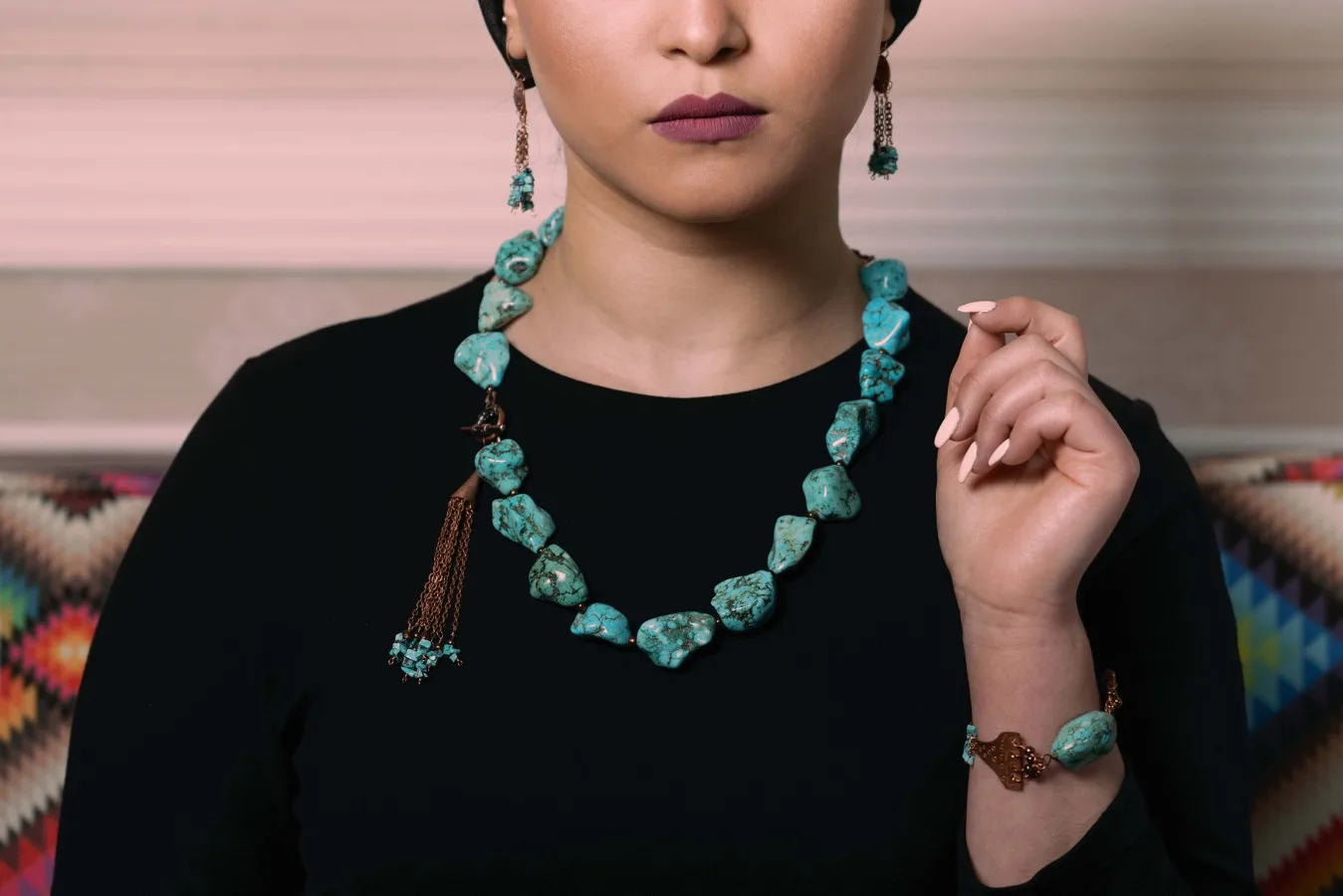
A turquoise necklace is one of the most versatile gemstone pieces you can buy, but the right choice depends on more than color alone. The best option balances stone appearance, setting quality, necklace length, and how often you plan to wear it.
If you are shopping for a turquoise necklace, start with the use case. A small pendant in sterling silver may suit daily wear, while a larger statement piece may be better for special occasions or outfits that need a focal point. The stone can range from pale blue to deep green-blue, and the style can feel bohemian, Western, refined, or modern depending on the design. sterling silver necklace styles offers more detail on this point.
What to look for first
The most important decision is whether you want a necklace that feels casual and wearable or one that stands out as a centerpiece. Turquoise is often chosen for its color and character, but not every piece is meant to do the same job.
Before comparing designs, think about these practical questions:
- Will you wear it every day or only occasionally?
- Do you want a pendant, a strand of beads, or a bold statement necklace?
- Should it coordinate with silver, gold, leather, or mixed metal jewelry?
- Do you prefer a natural, irregular stone look or a more uniform finish?
Those answers narrow the search quickly and help you avoid buying a piece that looks appealing in photos but does not suit your wardrobe.
Stone quality and appearance
With turquoise, appearance can vary widely. That is part of the appeal, but it also means buyers should look closely at what they are getting. Color, matrix, cut, and treatment all influence the final look.
Color
Turquoise can appear sky blue, blue-green, or more green than blue. Some buyers prefer a vivid blue for a classic look, while others like the earthier tone of greenish turquoise. There is no single “best” shade; the right one depends on personal taste and skin tone preferences.
Matrix
Matrix refers to the host rock or web-like pattern visible in some stones. A clean, solid-colored stone feels polished and minimal. A stone with matrix can look more organic and rustic. Many shoppers actively seek matrix for character, while others prefer a cleaner surface.
Natural, stabilized, and treated stones
Turquoise is often stabilized to improve durability, especially in jewelry worn frequently. That does not automatically make it lower quality; it simply means the stone has been made more practical for setting and daily wear. Treated turquoise may also affect color consistency. If you care about the stone’s origin or processing, read the product details carefully and look for clear disclosure.
A common misconception is that every bright or uniform turquoise piece is automatically superior. In reality, visual preference, intended use, and the honesty of the product description matter just as much as rarity or appearance.
Setting and metal choice
The setting affects both durability and style. For a turquoise necklace, the metal and construction should support the stone without overpowering it.
Sterling silver
Sterling silver is a classic pairing with turquoise. It complements cool-toned stones and fits Western, Southwestern, and bohemian styles especially well. Silver can show tarnish over time, so it may need occasional polishing.
Gold and mixed metals
Gold can make turquoise look warmer and more fashion-forward. Mixed metal designs can also be useful if you already wear both gold and silver jewelry. These options tend to feel more contemporary, but they may be less traditional depending on the design.
Bezel vs prong settings
A bezel setting surrounds more of the stone and often offers better protection for everyday wear. Prong settings can make the stone look more exposed and open, which may be attractive visually but less protective. For softer stones or larger pendants, a secure setting is usually a smarter long-term choice.
If you plan to wear the necklace often, inspect the bail, clasp, and chain construction as closely as the stone itself. A beautiful turquoise pendant is less useful if the chain feels flimsy or the setting leaves the stone vulnerable to knocks.
Necklace style and wearability
Style matters because turquoise can easily shift from refined to dramatic. Choosing the right silhouette helps the piece work with your wardrobe rather than sitting in a jewelry box.
Pendant necklaces
Turquoise pendant necklaces are the easiest starting point. They are adaptable, easy to layer, and usually work for both casual and slightly dressed-up outfits. A single stone pendant is a good choice if you want something wearable and not overly trend-driven.
Beaded necklaces
Turquoise bead necklaces lean more decorative and often feel artisanal or boho. They can be excellent for relaxed outfits, but they may not be the best choice if you want a subtle everyday piece.
Chokers and shorter lengths
Short turquoise necklaces can feel modern and editorial, but they are less forgiving if you are unsure about fit. They also draw more attention to the neckline and the stone size, so proportions matter. If the piece is bold, a shorter length can make it feel even more deliberate.
Longer strands
Longer necklaces create more styling flexibility and work well over sweaters, dresses, and simple tops. They are also easier to layer with other chains. The trade-off is that the stone may feel less prominent unless the design is intentionally statement-making.
How to match a turquoise necklace to your wardrobe
One of the most practical ways to choose a turquoise necklace is to think about what you already wear most often. That keeps the purchase useful instead of decorative-only.
- For neutral wardrobes: Choose a pendant or medium-size stone that adds color without overpowering simple clothing.
- For bohemian styling: Look for beadwork, mixed textures, leather accents, or layered designs.
- For Western-inspired looks: Sterling silver, oval stones, and traditional turquoise settings are strong options.
- For polished outfits: Pick a smaller, cleaner design with minimal matrix and a refined chain.
Turquoise pairs especially well with white, denim, black, cream, brown, and earthy tones. It also works against crisp shirts and simple knits because the color stands out without needing much else.
Durability and day-to-day use
Turquoise is valued for beauty, but it is not the hardest stone. That makes durability an important factor if the necklace will see frequent wear.
For everyday use, look for a design with a secure setting, a sturdy chain, and a size that will not catch easily on clothing. If you are active, travel often, or prefer to leave jewelry on throughout the day, a low-profile pendant is usually more practical than a large, exposed stone.
Also consider whether the stone is likely to contact perfume, lotions, cleaning products, or heavy moisture. A necklace that looks great in a display case may not be the best choice for someone who wants minimal upkeep.
Another overlooked consideration is how often you will need to remove the necklace. If you prefer jewelry you can put on and forget about, choose a design with fewer delicate edges, lighter movement, and a dependable clasp. how to choose gemstone jewelry offers more detail on this point.
Value: what makes one piece worth more than another
Value is not only about the stone itself. For turquoise necklaces, you are also paying for design, craftsmanship, and materials.
A well-made piece may cost more because the setting is cleaner, the chain is stronger, the proportions are better, or the overall design is more wearable. A simpler necklace can still be a smart buy if it uses a flattering stone shape and a durable construction.
Do not assume the most expensive piece is the best fit. A large or rare-looking stone may be impressive, but if the necklace does not suit your style or wear habits, it may offer less practical value than a more modest design.
Common mistakes to avoid
- Buying by color alone: A pretty stone is not enough if the chain is weak or the length is awkward.
- Ignoring treatment details: Natural and stabilized turquoise can look similar, so read descriptions carefully.
- Choosing the wrong proportion: A large pendant can overwhelm petite frames, while a tiny stone may disappear on a heavier chain.
- Overlooking maintenance: Some settings and finishes need more care than buyers expect.
- Assuming every necklace is for daily wear: A statement piece and an everyday piece are often very different purchases.
Alternatives if turquoise is not the perfect fit
If you like the look of turquoise but want something with a different practical profile, there are several good alternatives.
- Turquoise-inspired enamel or glass pieces: Useful if you want the color without the same care concerns.
- Other blue-green gemstones: Depending on style, options like amazonite, aquamarine, or apatite may appeal, though each has its own characteristics.
- Silver pendant necklaces: A silver design can give you a similar cool-toned look with a more minimal feel.
These alternatives can be especially helpful if you like the color family but want a more delicate, understated, or budget-friendly necklace.
Practical buying guidance
If you want a straightforward way to choose, use this sequence:
- Decide whether the necklace is for everyday wear or occasional styling.
- Pick a silhouette: pendant, beads, choker, or long strand.
- Choose a metal that fits the rest of your jewelry collection.
- Check the stone description for color, matrix, and treatment information.
- Look at chain strength, clasp quality, and setting style.
- Compare the necklace against outfits you already own.
That approach keeps the decision grounded in actual use rather than relying on the first attractive photo you see.
Who a turquoise necklace suits best
A turquoise necklace is a strong choice if you want jewelry that feels distinctive without being overly formal. It suits shoppers who like natural color, easy styling, and a little visual character. It is also a good option for anyone building a jewelry collection around silver, earthy textures, or layered looks.
If you prefer highly minimal jewelry, a large turquoise statement necklace may feel too bold. If you want a piece that can handle frequent wear with very little thought, choose a smaller, sturdier design rather than a delicate or oversized one. guide to statement jewelry offers more detail on this point.
The best turquoise necklace is the one that fits your routine as well as your style. If you use that standard, the choice becomes much easier: focus on stone quality, construction, proportion, and how naturally the necklace fits into your wardrobe.
