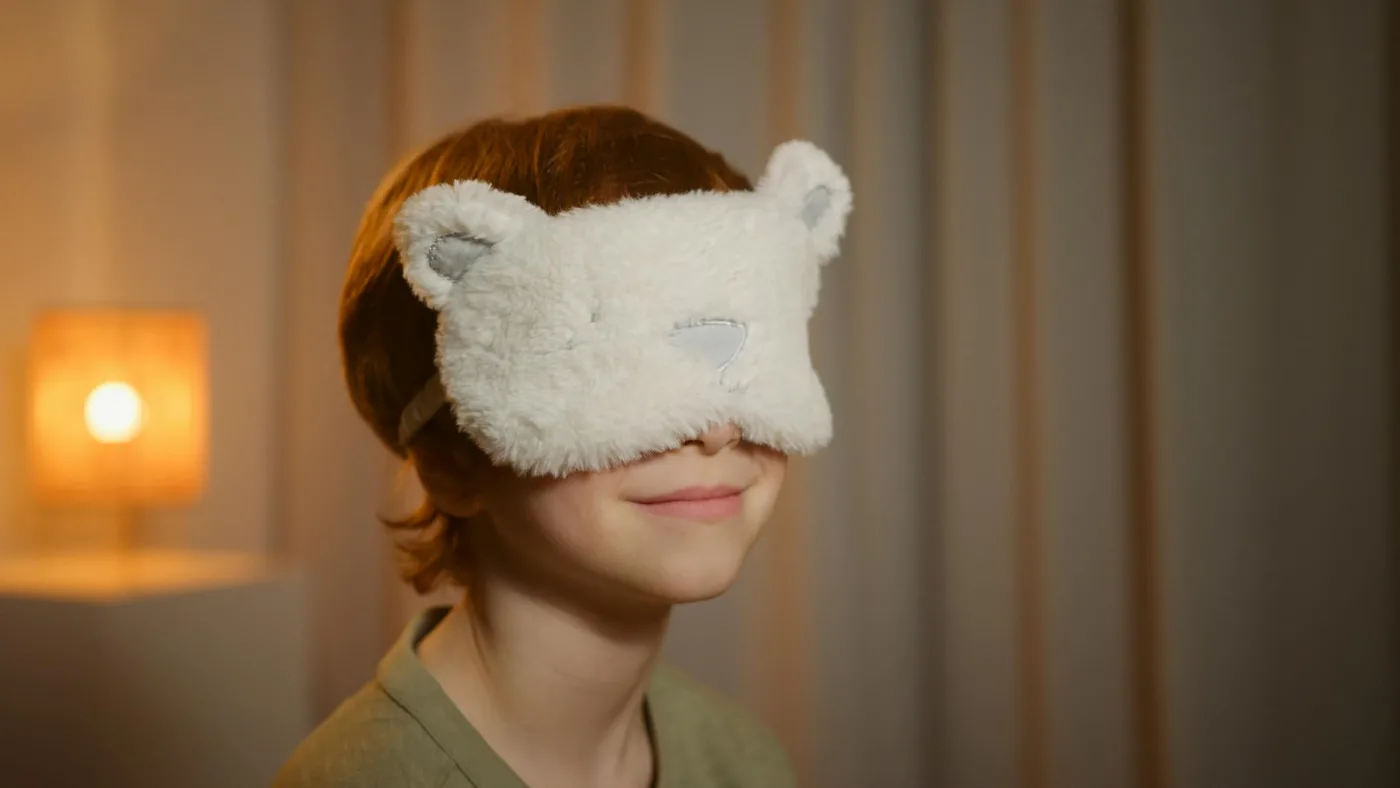
A kids sleep mask is a simple tool: it helps reduce light so a child can rest more comfortably at home, during travel, or in a bright sleeping environment. The best choice is usually the one that fits a child’s face well, feels soft against the skin, and stays in place without pressure or irritation. sensory-friendly wellness products for kids offers more detail on this point. Best Cover for a Weighted Blanket offers more detail on this point.
For most families, the decision comes down to three things: fit, comfort, and practical use. A mask that looks adorable but slips off, feels scratchy, or presses on the eyes will not be a useful bedtime accessory for long.
Who a kids sleep mask makes sense for
A sleep mask can be helpful for children who need extra light blocking in a shared room, on early flights, during road trips, or when daylight makes it hard to settle down. It can also be useful for older children who are sensitive to light and prefer a darker sleep environment.
That said, not every child will tolerate one. Some children dislike anything near their face, especially at bedtime. For those kids, room-darkening curtains, a dimmer night light, or a calmer bedtime routine may be a better first step.
What matters most when choosing one
The most useful shopping approach is to compare a few practical factors rather than focus on cute prints or packaging. A good children’s sleep mask should work with the child’s face, not against it.
Fit and size
Children’s faces vary a lot, so size matters more than many buyers expect. A mask that is too large can slide down and leak light around the edges. One that is too tight may leave marks, feel uncomfortable, or be removed during sleep.
Look for an adjustable strap if the child is old enough to tolerate one. A gentle elastic strap can be easier for some children, while a fully adjustable closure may offer a better fit for a wider age range. The right choice depends on the child’s head size, hair style, and how much they move in sleep.
Comfort against the skin
Because a sleep mask sits close to the face, softness is a major issue. Smooth, non-irritating materials are usually easier for children to accept than rough seams or stiff edging. The inside should feel pleasant around the eyes and nose bridge, especially for children with sensitive skin.
It also helps if the mask is lightweight. Bulky designs can feel distracting, while a slimmer profile is often easier for side sleepers or children who tend to shift positions overnight.
Light blocking
Not all masks block light equally. Some simply dim the room a little, while others fit more closely and reduce more light around the nose and sides. If your main goal is helping a child sleep in a bright environment, look for a design that sits close to the face without pressing hard.
Be careful with overly rigid or heavily contoured designs for younger children. A more structured mask may improve light blocking, but it can also be less comfortable. For many families, a moderately flexible mask is the better compromise.
Breathability and temperature
Some children dislike feeling warm around the eyes. Breathable materials can help the mask feel less stuffy, especially in warmer rooms or during travel. If the child tends to get overheated at night, avoid heavy fabrics unless there is a clear reason for choosing them.
Breathability is not just about comfort. A cooler-feeling mask is often easier to wear for longer periods, which matters if the goal is to keep it on until the child falls asleep.
Material choices and what they mean in real use
Materials affect softness, durability, cleaning, and how the mask feels over time. There is no single “best” fabric for every child, so the right choice depends on the child’s preferences and how often the mask will be used.
| Material type | Why families choose it | Possible downside |
|---|---|---|
| Soft synthetic fabrics | Often smooth, lightweight, and easy to wear | May feel less breathable depending on the construction |
| Cotton blends | Usually familiar and comfortable for many children | Can feel thicker or less sleek than some alternatives |
| Satin-like finishes | Often feel gentle on skin and hair | May not stay in place as well on every face |
| Plush or padded styles | Can feel cozy and help reduce light leaks | May be warmer or bulkier than simple designs |
A common misconception is that the softest-looking mask is automatically the most comfortable. In practice, structure matters too. A very plush mask can still be annoying if it shifts around, while a thinner design with good shape can feel better all night.
Safety and age-appropriate use
For younger children, especially those who are very small or easily bothered by face coverings, keep safety and supervision in mind. A sleep mask should never interfere with breathing, cause fear, or become a choking concern if the child removes it during sleep.
Age suitability also depends on maturity, not just the number on the label. Some older children are ready for a sleep mask during travel but not ready to sleep with one every night. If the child is new to the idea, start with short, calm practice sessions before expecting overnight use. travel sleep accessories for children offers more detail on this point.
If a child has sensory sensitivities, autism, or a history of resisting face coverings, a sleep mask may work better as an occasional tool than a nightly routine. The goal is comfort, not forcing compliance.
Straps, closures, and staying power
How the mask fastens can make a big difference. Elastic straps are simple and easy to use, but the fit may be less precise. Adjustable closures can fine-tune the fit, though some children may find them fiddly or distracting.
There is also a trade-off between security and independence. A child who wants to put the mask on alone may do better with a straightforward design, while a parent shopping for better fit may prefer a more adjustable option.
If a mask leaves marks, slides during the night, or is constantly being adjusted, the fastening system is probably not working for that child.
When a kids sleep mask is the wrong solution
A sleep mask is helpful only when light is the main problem. If the child is waking because of noise, discomfort, room temperature, anxiety, or an inconsistent bedtime routine, a mask alone will not solve much.
In some homes, blackout curtains or a darker sleep setup are a better long-term answer. For travel, the mask may still be useful, but families should think of it as one part of a broader comfort kit rather than a cure-all.
Practical trade-offs to expect
The most comfortable sleep masks are not always the best at blocking every bit of light. The most structured masks may help with darkness but feel less natural on a child’s face. The easiest masks to pack may not be the most durable.
That trade-off is normal. A wise purchase is usually the one that balances these needs for your specific child rather than trying to maximize every feature at once.
Another overlooked consideration is how the mask behaves after a few uses. Some materials feel fine at first but become less pleasant if they wrinkle, stretch, or trap warmth. If the mask will be used often, choose something that seems easy to keep clean and simple to re-wear.
How to shop with a child in mind
Start with the context. A mask for airplane naps does not need to perform exactly like one used every night at home. A travel mask can prioritize portability and quick comfort, while a home mask may prioritize a better fit and easier wear over longer periods.
Then narrow by the child’s preferences:
- If the child dislikes pressure, prioritize light weight and minimal seams.
- If the child is sensitive to brightness, prioritize a better face seal.
- If the child moves a lot during sleep, prioritize a secure but gentle strap.
- If the child is picky about textures, choose the softest-feeling material possible.
- If the mask will be packed often, choose a simple design that folds or lies flat easily.
It can also help to think about cleaning. Children’s accessories tend to need more frequent washing than adult ones, so a mask that is simple to care for may be more realistic than one with delicate trims or complicated parts.
Common mistakes parents make
One common mistake is buying for appearance first. A fun pattern is nice, but comfort and fit decide whether the mask gets used.
Another mistake is assuming one size fits all children. A mask that suits a preschooler may not suit an older child, and a mask that works on one child may ride up or leak light on another.
Parents also sometimes expect immediate success. Some children need several nights to accept a sleep mask. Introducing it as part of a calm bedtime routine usually works better than presenting it as something the child must wear right away.
Good alternatives if a mask is not the right fit
If a child refuses a sleep mask, there are still practical ways to reduce light and improve sleep comfort:
- Blackout curtains or room-darkening shades
- A smaller or warmer-toned night light
- Travel window covers or shade accessories
- Improved bedtime routine consistency
- A comfort object or calming sleep accessory
These alternatives can be especially useful for younger children or those with sensory sensitivities. In many cases, a room-level solution is easier than asking a child to wear something on their face all night.
What to do after you buy one
Once you choose a kids sleep mask, introduce it gradually. Let the child feel it, try it on for a few minutes, and wear it during a quiet activity before bedtime. This lowers resistance and helps identify fit issues early.
After the first few uses, check for pressure marks, slipping, complaints about heat, or signs that the mask is being removed in sleep. Those are useful clues. They usually mean the mask needs a different fit, a different material, or a different role in the bedtime routine.
If the mask works well, keep it in the same place as other bedtime items so it becomes part of the routine. Familiarity matters, especially for children who do better with predictable steps.
What age is appropriate for a kids sleep mask?
That depends on the child’s comfort, maturity, and ability to wear it safely. Older children are often better candidates than very young ones, but readiness matters more than age alone.
Should a sleep mask be tight?
No. It should stay in place without pinching, leaving marks, or causing discomfort. A gentle fit is usually better than a tight one.
Is a padded mask better than a thin one?
Not always. Padded masks may block more light, but thin masks can be more breathable and easier to tolerate. The best choice depends on the child’s needs.
Can a sleep mask help with naps on the go?
Yes, especially during travel or in bright environments. For some children, it can make short naps easier by reducing visual stimulation.
What if my child keeps taking it off?
That usually means the mask is uncomfortable, unfamiliar, or simply not a good match. Start with shorter wear times and consider a softer or lighter design.
Picking the right one
The best kids sleep mask is the one that solves a real problem without creating a new one. Focus on fit, softness, light blocking, and how well the design works for your child’s routine. If you keep those priorities in order, it becomes much easier to choose a mask that is actually useful rather than just appealing on the shelf.
