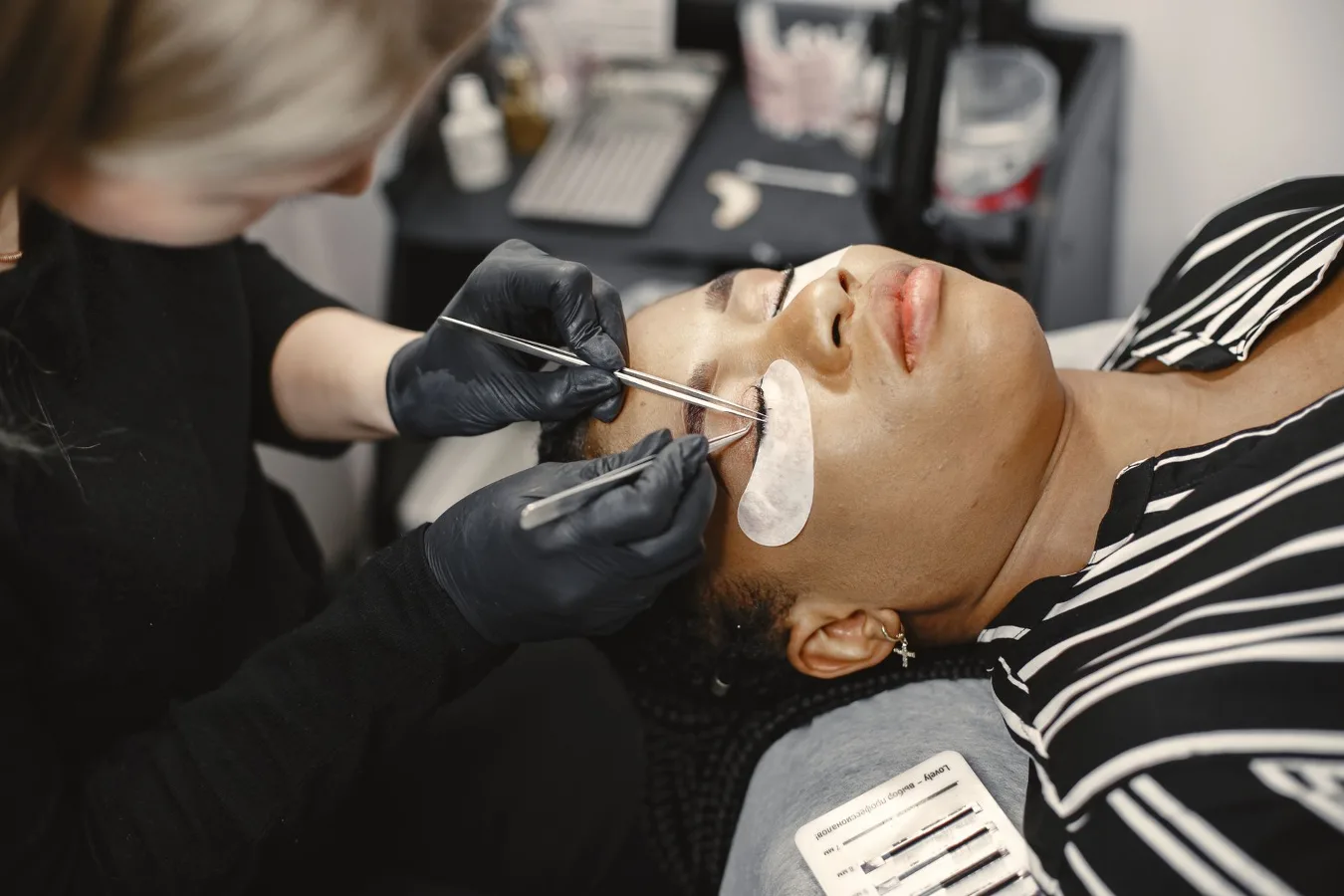
If you wear lash extensions, the best sleep mask is one that keeps fabric off the lashes, reduces pressure on the eye area, and stays in place without rubbing. In most cases, a contoured or 3D sleep mask is the safest place to start because it creates space around the lashes instead of flattening them. pink sleep mask offers more detail on this point. sleep eye mask with eyelashes offers more detail on this point.
That said, not every lash wearer needs the same kind of mask. Your sleep position, face shape, lash length, and sensitivity to light all matter. A mask that works well for a back sleeper may feel awkward for someone who sleeps on a side, and a soft fabric mask may still be a poor choice if it presses directly against extended lashes.
What matters most in a sleep mask for lash extensions
The main job of a sleep mask here is not just blocking light. It is to protect the lash line from direct contact, compression, and repeated friction through the night. Extensions are attached to natural lashes, so anything that bends, twists, or rubs them can make them look messy sooner and may affect how long they stay neat.
For that reason, the features below are more important than brand name or decorative details.
Shape and internal space
The single biggest factor is whether the mask clears the lashes. A flat mask can press the lash fans downward, especially if you sleep on your stomach or side. A contoured mask with recessed eye cups gives the lashes room to move naturally.
Look for a design that sits around the eye socket rather than on top of the eyelids. This is one of the most overlooked details, because a mask can feel soft in your hand and still be too shallow once it is on your face.
Fit and adjustability
A mask that is too tight can be just as troublesome as one that is too shallow. Tight straps pull the mask into the eyes and increase pressure on the lash line. A loose mask may slide around and create friction instead.
An adjustable strap is usually helpful, especially if you share a bed with a fan on, move around a lot, or want a mask that works in different seasons and hairstyles. The goal is a secure fit without compression.
Material against skin and lashes
Softness matters, but not every soft material performs the same way. Smooth fabrics tend to glide better over the skin and are less likely to snag than rougher textures. Many lash wearers prefer silk or satin-like surfaces because they feel gentle and reduce tugging.
Even so, material alone does not solve fit issues. A smooth mask that presses too firmly can still disturb the extensions. Think of material as the finishing detail, not the main fix.
Light blocking versus lash protection
Some masks excel at blackout coverage but are too flat for extensions. Others leave a little more light at the edges but are much kinder to the lash line. If you sleep best in total darkness, you may need a deeper contoured design or one with better side coverage.
This is a practical trade-off: maximum light blocking and lash-friendly space do not always come packaged together. The right choice depends on which issue bothers you more at night.
Buyer scenarios: which type fits your routine
Different sleep habits call for different designs. Choosing by lifestyle usually works better than choosing by appearance alone.
If you sleep on your back
Back sleepers often have the easiest time finding a lash-friendly sleep mask. A lightly contoured mask with a comfortable strap may be enough, as long as it does not press downward when you turn your head.
If you are mostly a back sleeper but occasionally shift position, look for a mask with enough depth to handle movement without flattening the lashes.
If you sleep on your side
Side sleeping creates more direct contact between the mask and the pillow, which can increase rubbing around the eye area. For this reason, side sleepers usually benefit from a deeper 3D mask with a stable strap and a shape that does not collapse easily.
A flat mask is the hardest style to make work here. It may feel fine when you first lie down, but the pillow can push it into the lash line during the night.
If you are sensitive to light
If blackout coverage matters a lot, choose a contoured mask with enough depth and a nose bridge that helps limit light leaks. Some people assume they must accept more pressure to get better darkness, but that is not always true. A better shape may solve both concerns.
If you travel often
Travel adds another set of constraints: cramped seating, changing sleep surfaces, and inconsistent lighting. A lightweight contoured mask can be a practical compromise because it protects the lashes and is easier to pack than bulkier accessories.
Still, travel is where fit problems become more noticeable. If the strap tends to shift or the mask lifts at the corners, it may be frustrating on planes or in hotels.
Material and design factors worth comparing
Shopping for a sleep mask for lash extensions is easier once you break it into a few concrete features instead of scanning product claims.
| Feature | Why it matters | What to look for |
|---|---|---|
| Contour depth | Prevents direct pressure on extensions | Recessed eye cups with room around the lashes |
| Surface material | Reduces friction against skin and lash line | Smooth, gentle fabric that does not snag |
| Strap design | Helps the mask stay in place without tightening | Adjustable, comfortable, non-digging strap |
| Nose bridge | Improves light blocking and fit | Flexible but not rigid, with minimal pressure |
| Breathability | Affects comfort through the night | Material that feels comfortable for extended wear |
A detail many buyers miss is the nose area. If the bridge is too stiff or sits too low, the mask can push upward into the eyes or downward into the cheeks, both of which can be annoying for lash wearers. A better nose shape often makes the whole mask feel more wearable.
Another overlooked factor is edge design. Bulky seams, hard piping, or stiff trim can create pressure points even when the center of the mask seems fine.
Trade-offs to expect
There is no perfect sleep mask that does everything equally well. A realistic purchase decision means choosing the compromise that matters least to you.
- More depth usually means better lash protection, but sometimes a slightly bulkier fit.
- More light blocking can mean a snugger seal, which may feel warmer or less airy.
- Ultra-soft materials can feel luxurious, but softness alone does not guarantee good lash clearance.
- Adjustable straps improve fit, but some straps are more noticeable for sensitive sleepers.
If your lashes are very full or long, prioritize space first and softness second. If your extensions are short and you mainly need help with light sensitivity, a lower-profile contoured mask may be enough.
Common mistakes when choosing one
Several buying mistakes show up again and again, and most of them come from focusing on comfort in the hand rather than comfort on the face.
- Picking a flat mask because it feels soft: softness does not matter if the mask presses the lashes down.
- Choosing a tight strap for blackout coverage: pressure can cause more discomfort than the light you are trying to block.
- Ignoring sleep position: a mask that works for back sleeping may fail for side sleeping.
- Assuming all silk-like fabrics are the same: the weave, lining, and construction still matter.
- Buying based on appearance alone: decorative masks can be less practical for lash extensions.
A common misconception is that any eye mask labeled “gentle” is automatically lash-safe. In practice, the cut and depth matter more than the marketing language. complete guide to led diffuser offers more detail on this point.
How to use a sleep mask without stressing your lashes
Even a good mask works better when paired with sensible nighttime habits. The goal is to reduce friction and keep the lash line as undisturbed as possible.
- Put the mask on gently instead of pulling it down forcefully over the face.
- Adjust the strap so it sits securely without leaving a strong mark.
- Avoid masks with stiff lashes or decorative trim that can catch on extensions.
- Check that the eye cups clear the lashes before settling in.
- Replace a mask that loses shape, since collapsed contour space can bring pressure back.
If you use eye creams or other nighttime skincare, let them absorb before putting the mask on. That helps reduce transfer to the fabric and makes the mask more comfortable for repeated use.
When a sleep mask may not be the best solution
Some people wear very long or dense lash sets, sleep heavily on one side, or simply dislike anything on the face at night. In those cases, a sleep mask may help only partly. You may be better off combining other adjustments, such as changing pillow setup, improving room darkness, or choosing a smaller-profile mask with a looser feel.
If your mask repeatedly presses the lashes even after adjustments, it may be the wrong shape for your face. No single product works for every eye shape or lash style.
Practical next steps before you buy
Use these questions to narrow the options quickly:
- Do I sleep mostly on my back, side, or both?
- Do I need maximum darkness or maximum lash clearance?
- Does my face usually fit shallow or deep eye masks better?
- Do I prefer a very soft feel, or is structure more important?
- Will I use this at home, while traveling, or both?
Answering those questions usually leads to a better match than browsing by price or aesthetics alone. For lash extensions, the right sleep mask is less about luxury and more about preserving the shape, comfort, and look of the lashes you already have.
If you are choosing between a few options, start with the one that gives your lashes the most room, then refine from there based on comfort and light blocking. That order tends to produce the least regret.
