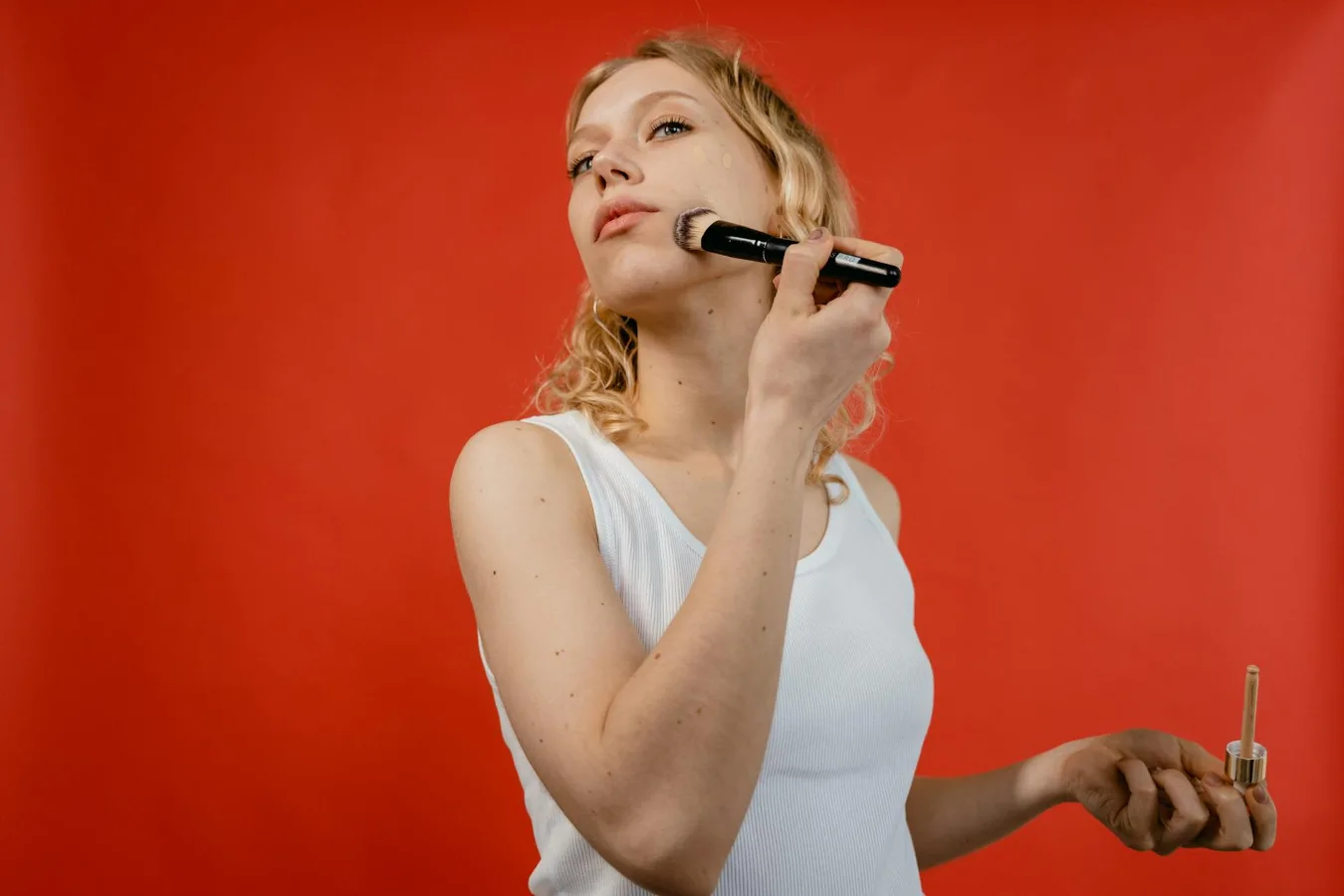
An angled makeup brush is a brush with a slanted head that helps you place product more precisely along curves, edges, and narrow areas. It matters most when you want control: filling brows, defining lash lines, applying contour with more structure, or creating a sharper edge with powder or cream formulas.
The right angled brush is not just about the angle itself. Bristle density, firmness, width, and whether the brush is synthetic or natural all change how it performs. A brush that works well for brows may be the wrong choice for cheek contour, and a soft angled eye brush will feel very different from a firm, dense one.
When an angled makeup brush is worth choosing
An angled makeup brush is most useful when the area you are working on has a curve, corner, or edge that is hard to reach with a round or flat brush. The slanted shape gives you a more controlled starting point, which can help you place product exactly where you want it before blending.
It is especially helpful for:
- eyebrows, where the angle can mimic short hair-like strokes
- eyeliner application, especially with powder, gel, or shadow
- contour placement along the hollows of the face or jawline
- blending the outer corner of eye makeup without over-spreading color
- detail work around the nose, lips, and smaller facial contours
The main misconception is that angled brushes are only for brows. They can be one of the most versatile precision tools in a makeup bag, but the exact use depends on the brush’s stiffness and size. A small, firm angled brush behaves like a detail tool. A larger, softer angled brush is better for gentle shaping and blending. guide to eyebrow tools offers more detail on this point.
Step-by-step criteria for choosing the right one
1. Start with the product you use most
Choose the brush based on the formula you apply most often. That matters more than the label on the packaging.
- Powders usually work well with a brush that has some flexibility, so it can pick up product without looking harsh.
- Creams and gels typically need denser bristles so the brush can move product cleanly without splaying.
- Waxy brow products often perform better with a firm, narrow angled brush that gives controlled strokes.
If you want one brush to do several jobs, a medium-density synthetic angled brush is often the safest starting point. It tends to be easier to clean and more compatible with both cream and powder formulas than a very fluffy or very stiff brush.
2. Match the brush size to the area
Size is one of the most overlooked details. A brush that is too wide can make precision work harder, while a brush that is too small can slow you down and feel scratchy if the bristles are too sparse.
- Small angled brushes are better for brows, tight eyeliner work, and detail correction.
- Medium angled brushes are useful for nose contour, soft eye definition, and controlled cheek placement.
- Larger angled brushes can suit broader cheek contour or quick application, but they are less exact.
If your goal is clean definition, err smaller. If your goal is fast, blended placement, a slightly larger brush may be more practical.
3. Look at bristle density and firmness
Density affects how much product the brush picks up and how much pressure it needs to spread it. Firm brushes deposit color more deliberately. Softer brushes diffuse more easily.
This trade-off matters because not every makeup style benefits from a crisp edge. For brows and liner, firmer bristles often offer better control. For contour or soft shading, a slightly softer brush can reduce the risk of a stripey finish. makeup brush bristle types explained offers more detail on this point.
A common mistake is buying the densest brush available because it feels precise in the hand. In practice, a very dense brush can load too much product and make blending harder, especially with pigmented formulas.
4. Choose bristle type based on formula and maintenance
Synthetic bristles are usually the most practical choice for many angled brushes because they work well with cream and liquid formulas and are generally easier to clean. They also tend to be more consistent in shape, which helps with controlled placement.
Natural bristles can work well for powder, but performance varies by the brush construction and intended use. Some people prefer the softer feel of natural hair for powder blending, while others find synthetic options easier to manage and more hygienic for mixed-use routines.
For a buyer guide, the key question is not whether one is always better. It is whether the brush matches your products, how often you wash it, and whether you want a tool that can handle more than one category.
5. Decide whether you want crisp definition or soft control
Angled brushes are not all designed for sharp lines. The cut of the angle and the flex of the bristles shape the result.
- Sharper, more defined looks usually need a firmer edge and a narrower head.
- Soft, diffused looks usually need a gentler slant and slightly more give.
This is especially important for eye makeup. A brush that is ideal for a clean brow tail may be too rigid for softly smudging shadow at the outer corner of the eye.
How angled brushes are commonly used
For eyebrows
Brows are one of the most common uses because the slant can follow the natural brow line and create short, controlled strokes. A small angled brow brush is often paired with pomade, pencil-adjacent powder techniques, or brow wax.
For this use, look for:
- firm but not scratchy bristles
- a narrow head for detail work
- a handle length that feels steady in the hand
If the brush is too thick or too soft, brow application can look heavy or fuzzy instead of structured.
For eyeliner and lash-line definition
Some angled brushes can apply powder or gel near the lash line, especially if you prefer a softer line than a traditional liquid eyeliner gives. The angle helps you press product close to the lashes and lift the outer corner slightly.
Here, the brush should feel precise. A large or floppy angled brush is usually less useful than a compact one. If you mainly want a smudged line, a softer angled brush can help blend the edge more naturally.
For contour and face shaping
An angled contour brush can help place powder or cream under the cheekbone, along the jaw, or around the hairline. The slant helps the brush sit against the facial structure more naturally than a flat brush might.
The trade-off is that too much firmness can create obvious lines. If you want a natural contour, a brush with moderate density and enough softness to diffuse product is often more forgiving.
For detail blending
Angled brushes also work well for small blending jobs, such as softening eyeshadow at the outer corner, applying highlight near the nose, or cleaning up edges around the brow. In these cases, the brush is more of a precision blender than a placement tool.
Examples of brush choices by use case
| Use case | Helpful brush traits | What to avoid |
|---|---|---|
| Brows | Small, firm, narrow angled head | Very fluffy or oversized brushes |
| Eyeliner with powder or gel | Compact shape, precise edge, synthetic bristles | Loose bristles that spread product too widely |
| Soft contour | Medium density, slightly flexible bristles | Overly dense brushes that leave harsh lines |
| Outer-eye shading | Small angled head with moderate softness | Brushes that are too stiff for blending |
| Detail correction | Tapered slant, controlled tip | Wide heads that block visibility |
Practical trade-offs to expect
Every angled brush involves a compromise. A firmer brush gives more control, but it can make blending harder. A softer brush blends more easily, but may feel less exact. A small brush improves precision, but it can take longer to finish an area. A larger brush speeds up application, but it may be less forgiving.
This is why many makeup users end up with more than one angled brush. One may be better for brows, while another works better for contour or eye detail. If you are only buying one, the best all-around choice is usually a medium-sized synthetic angled brush with moderate firmness.
Another practical constraint is cleanliness. Angled brushes often touch waxes, gels, creams, and powders in the same routine. That means buildup can affect performance quickly. If the edge starts to look fuzzy or the brush loses its shape, precision drops fast. choosing brushes for cream vs powder products offers more detail on this point.
Common mistakes when buying one
- Choosing by appearance alone: A sleek handle does not guarantee usable bristle shape or the right density.
- Buying too stiff a brush for soft makeup: This can make brows or contour look harsh.
- Assuming one angled brush can do everything: A brow brush and a contour brush are often very different tools.
- Ignoring bristle material: Synthetic and natural bristles behave differently with creams, gels, and powders.
- Skipping maintenance planning: Some products are harder to remove, and a dirty brush changes how product sits on the skin.
A less obvious issue is handle comfort. If the brush is difficult to hold at a controlled angle, the shape may be right but the tool may still feel awkward in use. Precision depends partly on how stable the brush feels in your hand.
How to care for it so it keeps its shape
Brush care matters because an angled head is only useful when the edge stays defined. Product residue, especially from creams and waxes, can cause the bristles to clump or bend out of shape.
- Clean the brush regularly based on how often you use it and what formulas you apply.
- Reshape the head gently after washing.
- Let it dry fully before storing it in a closed container.
- Avoid storing it with pressure on the bristles, which can flatten the angled cut.
If you use the brush for both brow product and eye makeup, clean it more often. Mixed-use brushes can transfer residue and affect both color payoff and finish.
When a different brush may be the better choice
An angled makeup brush is useful, but it is not always the best tool. If you want a diffused all-over wash on the eye, a fluffy blending brush may be easier. If you want a very sharp eyeliner wing, a fine liner brush may give better control. For full-coverage cheek color, a rounded face brush or tapered contour brush might feel more efficient.
Use an angled brush when the shape helps you work with the natural lines of the face. Use another brush when the job asks for broader blending, more coverage, or a different finish.
Quick checklist before you buy
- Does the brush match the formula you use most often?
- Is the size appropriate for the area you want to work on?
- Do you want firm definition or softer blending?
- Are the bristles shaped tightly enough to stay precise?
- Will it be easy to clean and maintain?
- Would a separate brush for brows, eyes, or contour be more practical?
FAQ
What is an angled makeup brush used for?
It is used for precise application along curves and edges, especially brows, eyeliner, contour, and small blending tasks.
Is an angled brush good for eyebrows?
Yes. A small, firm angled brush is one of the most useful tools for brow powders, pomades, and wax-based styling.
Can I use one angled brush for eyes and brows?
You can, but many people prefer separate brushes for hygiene and control, especially if one product is cream-based and the other is powder.
Are synthetic bristles better for an angled makeup brush?
Synthetic bristles are often the more practical choice for cream, gel, and mixed formulas because they are easier to clean and usually more consistent in shape.
How do I know if the brush is too stiff?
If it drags, deposits too much product, or makes blending difficult, it may be too stiff for your preferred look.
An angled makeup brush earns its place when precision matters more than speed. The best one is the one that matches your products, your hand feel, and the level of definition you want. For many routines, that means starting with a medium synthetic option and then adding a smaller or softer brush only if your makeup style needs it.
